Pokazywanie postów oznaczonych etykietą Air Crashes. Pokaż wszystkie posty

piątek, 22 maja 2015

Forgotten Flight 902

At 20:54 an airplane was seen on soviet radars. 25 minutes later the aircraft entered Soviet airspace in the area of Kola peninsula. It was an intruder, that had to be shot down.
KAL902
Korean Air Lines Boeing 707 Fitzgerald.jpg
From Wikipedia
In the 70s many US/NATO reconnaissance aircraft spying the USSR would fly in from the area of the North Atlantic or even the North Pole. It was a high tension area. Times were different. Civilian aircraft wouldn't fly from Europe to Asia like they do today, over Russia.
Korean Air Lines flew their aircraft from Paris to Seoul via Anchorage, Alaska using a Boeing 707. On April 20 1978, one of those flights, KAL902, took off from Paris Orly Airport. A total of 109 people were on board. The route to Anchorage took the 707 over the UK, Norwegian Sea, northern Greenland, quite close to the North Pole. Both magnetic and "physical" Pole.

KAL902's route (from Wikipedia)
The airplane had no INS (http://aerostudents.com/files/avionics/InertialNavigationSystems.pdf), nor GPS. Due to errors with calculating magnetic declination, when over Ellesmere's Island, the plane turned right. The proximity to the North Pole played the biggest role in making this mistake. Afterwards, the plane passed over Svalbard, then Barents sea, closing the USSR border. With no ground reference, as the areas of north Greenland or the Arctic Ocean are pretty much the same to the route flown after the change of course, Korean pilots didn't realise their mistake. They might haven thought about it, but maybe they were to tired, lazy or basically trying not to think, that they did something wrong.
Soviet radars spotted the plane at 20:54, while 400km away from the border. They first assumed, that it was one of naval aircraft from Murmansk, coming back from it's mission, having not changed his IFF code. At 21:19, flying over Kola Peninsula, the 707, with crew unaware of the danger they have flown into. On the ground, Su-15 pilots were ordered to take off and intercept the intruder. Mach 2 capable, the Su-15 would be able to intercept the slow flying 707. 
Sukhoi Su-15
From Wikipedia
One of the pilots, Alexander Bosov, identified the planes as the RC-135. The RC-135 is a reconnaissance aircraft design, based on the 707. Another thing that proved bosov to be right was the "Maple leaf" on the intruder's tail. The Su-15 pilot thought, that the RC-135 (in fact 707) belonged to Canada, a NATO country. The commander told the base about his faulty observations. Why faulty?The Leaf was actually a stork with spread leafs and Canadian Air Force never operated the RC-135, nor any military 707 variation (A 707 was used for VIP transport).

Korean 747-SP. The "maple leaf" can be seen on the tail.
From Wikipedia
Soon, Bosov noticed, that the aircraft is in fact civilian, having Chinese characters on the tail, and the maple leaf, an airline logo. Bosov radioed the base, correcting himself, and saying that the airplane is civilian.

Source: Wikicommons
According to ICAO, an interceptor should fly up to the intercepted aircraft from the back, and then outrun the intercepted aircraft and stay in front of the intercepted airplane on the left side of it. The interceptors should wave their wings, which the intruder should interpret as: be aware and do what I order you to do. The intercepted airplane should do the same thing as the interceptor, showing, that they understand. Then, the interceptors should guide the intruder down to the closest airport or outside the border of the country (which in the intruder has flown into).

F-18 intercepts a Tu-95, USAF photo.
At the time, captain Kim (captain) noticed, that something is clearly wrong. The appearance of soviet aircraft showed, that he is far of course. The captain switched landings on, in order to show, that he is going to follow the Soviet aircraft. He tried contacting the Su-15s. But there was no response.
kal 902 1
From Wikicommons.
Meanwhile the Soviet commander was ordered to fire at the Korean airliner. The commander-Alexander Bosov tried to convince ground about the fact, that the intercepted aircraft was civilian. Despite the fact, ground still ordered an attack on KAL902. The first missile (R-60 missile) missed the 707. The second missile, the same type, hit the left wing. The part of the wing fell off. It was about 3,5-4 metres long. Debris hit a part of the passanger cabin, causing a decompression and killing two people.
R-60 missile.

kal 902 2
From Wikicommons
The last part of the flight isn't known in 100%. The crew descended the 707 from 30 000ft. KAL902 disappeared from Soviet radar. However, the sot down part of the wing was still on radar and mistook it as some kind of missile, dispatching another Su-15. The commander, Alexander Bosov  was replaced, after his aircraft began running low on fuel. Meanwhile the 707 was searching for a place to land. Only one Su-15 followed the plane. The Sukhoi's pilot was probably trying to make the plane land in a Russian Air Base.
The Korean aircraft was still flying for about 40 minutes, close to the Finnish border around the region of Karelia. In April, most Karelian lakes are frozen. Captain Kim was trying to find one, in order to put his plane down. He attempted to land several times, however his efforts were all in vain. The 707 finally landed on the frozen Korpijarvi Lake in Karelian ASSR, around 140km from the Finnish border. The touchdown was very rough.
Crash site photographs: http://ilmari.puheenvuoro.uusisuomi.fi/78410-lento-kal-902-v1978 http://englishrussia.com/2008/06/03/the-korean-boeing/#more-1961
Korean Air Lines 902 on land.jpg
Crash site photograph (from Wikicommons)
After two hours 107 survivors were rescued from the crash site by Soviet helicopters. The rescuers first saw Coca-Cola, Beer or read western newspapers and magazines.  Two people were dead, mainly because of the decompression, however details aren't known. Survivors were flown to the town of Kem.After two days passengers were released to  the US consulate, in Leningrad. The crew was kept in Murmansk, and later formally apologised. Afterwards, they were released, too. In the end, everyone was flown back to Seoul and payed $100, 000.

An L-1011 equipped with INS. (From Wikipedia)
Who was at fault? At first, Korean Air. Why? In 1978 the INS was already in use. The shootdown plane didn't have such equipment. This mistake would have not been made, if an INS had been installed. Due to the proximity of the North pole, the route could have been changed, as well as stopovers. Perhaps a Paris-New York (Chicago, Toronto, Boston)-Anchorage (Seattle would make it, too, as well a Honolulu)-Seoul route would be better and safer. However, this isn't all. Soviet pilots were unfamiliar with ICAO procedures. There always night have been a situation, with a civil, non-Soviet airliner. This didn't happen. Quite importantly, the ground officers played the biggest role in the accident. There are a few things, that can explain decision, though they can be questioned (especially the third argument). The first one is that, they might have been tired and weren't sure, about what they were doing. Perhaps what Bosov said wasn't conviencing enough, If he sated, that "It might be a civilian plane, etc.", the ground could still think, that the 707 was on a spy mission, instead of a civilian flight. The third argument, is that ground could think, that a spy plane uses a civilian livery, in order to trick everyone out.
The lesson from KAL902 wasn't learnt. Later on, similar events happened. One of them KAL007, was eventualy one of the most tragic air disaster at the time, when it happened. 269 people died. Luckily, Cold war ended in 1991.
BTW
Remember, aviation is the safest way to travel! Don't forget about it!
SolsticeMiGsmall (7633859414).jpg
Mig-21, a soviet fighter jet. (Source: Wikipedia)


piątek, 6 marca 2015

The weirdest plane crashes- Pilot vs Instruments Part Two

This time something different. Pilots with wrong instruments. Wrongly indicating components. This happens in life, however it's not always it. Some pilots do know that the other crewman are doing the wrong thing, but don't want to tell them. It happened in history.
This time, not the weirdest plane crashes, but some unusual ones. Now, let's see one of them.

Air India 855 Deadly Indicators.
On New Years day, 1978 Air India 855 was taking a flight from Mumbai to Dubai. There were 213 people on board. The aircraft operating the flight was A Boeing 747-200, Emperor Ashoka, the first Jumbo jet delivered to the airline.


 The plane took off Mumbai Intl Airport at 20:40. After a minute the crew was supposed to turn right. The captain began the turn.
Shortly the Captain noticed a toppled ADI, meaning it is stuck, showing the plane is still in a right turn. The F/O agreed with the commanders statement, however the Flight Engineer, looking at the Backup ADI noticed a difference. The Captain however had his own solution, banking the plane even more to the left. The commander used the rudder and yoke to control the plane, the FE tolled the captain not to bank the plane, however he didn't stop. Just 101 seconds after take-off the plane hit water.
All passengers and crew perished. It was the deadliest air crash of India at the time.
The cause of the crash, well two factors. ADI malfunction. The captains artificial horizon wasn't working properly. It was stuck on a right bank indication.
Indicators sometimes fail, that's normal. This time, however the pilots were at fault. At first, the captain is god. That is  the way the first officer (at all) and Flight engineer (too late and probably not to directly) didn't tell the captain, that he shouldn't turn the plane left and left even more. Quite common.
Tenerife, March 23rd. A KLM 747-200 collides with a Pan Am Jumbo jet. The captain of the KLM captain began the takeoff roll with ATC clearance. The other crewman did know the situation, but didn't tell the captain about his mistake. In addition the commander trained and gave licence to the First officer, the F/O obviously didn't want to tell him about the mistake. Like if you wanted to tell your boss, that he made a mistake. Easy to say, but hard to do.
Another 747 (200 ironically) crash with an indicator problem occurred in 1999. A Korean Air Cargo plane lost control and crashed near Stansted, after a malfunctioning gyro made the captains ADI do funky stuff and indicate weird things, he steered and banked the plane, until it crashed. The First Officer and Flight Engineer were much younger, and refused to say that the commander overbanked his plane. Another aspect, politeness to people with higher ranks is well known and usual to many Asian cultures. It includes Korea.
A plus of it all, now pilots flying together have to be similar age. There's also training, so that F/O make remarks and notes of captains mistakes, a general improvement is seen. Hopefully similar crashes won't ever happen. Because the captain isn't god. He is as human as other pilots, just mor experienced. Usually.

środa, 4 marca 2015

The weirdest plane crashes- Instruments vs. Pilot.

As pilots can't always fly the plane with only visual clue, they rely on instruments. Obvious and easy like 2+2. However sometimes pilots don't want to, or can't believe what the instruments are telling them. Not a problem with nice visibility. However at night or a at a foggy day, they are your one and only friend. The obvious part has ended.
On the other hand, many pilots incase of an emergency situation believe in their senses, the captain, wrong indicators. Not that obvious why. Some instruments are wrong, but in addition pilots don't know what to do.


An example- spatial disorientation. A situation were pilots don't trust there instruments, but senses in order to fly an aircraft, the definition is kind of mine and unofficial.  IMHO some pilots don't rely on indicators, but some visual cues, such as lights, which can get them very wrong. The feeling of bank, speed or forward roll (that is how you'd call it) causes a massive confusion in the pilots mind.
Subsequently, you get crashes.

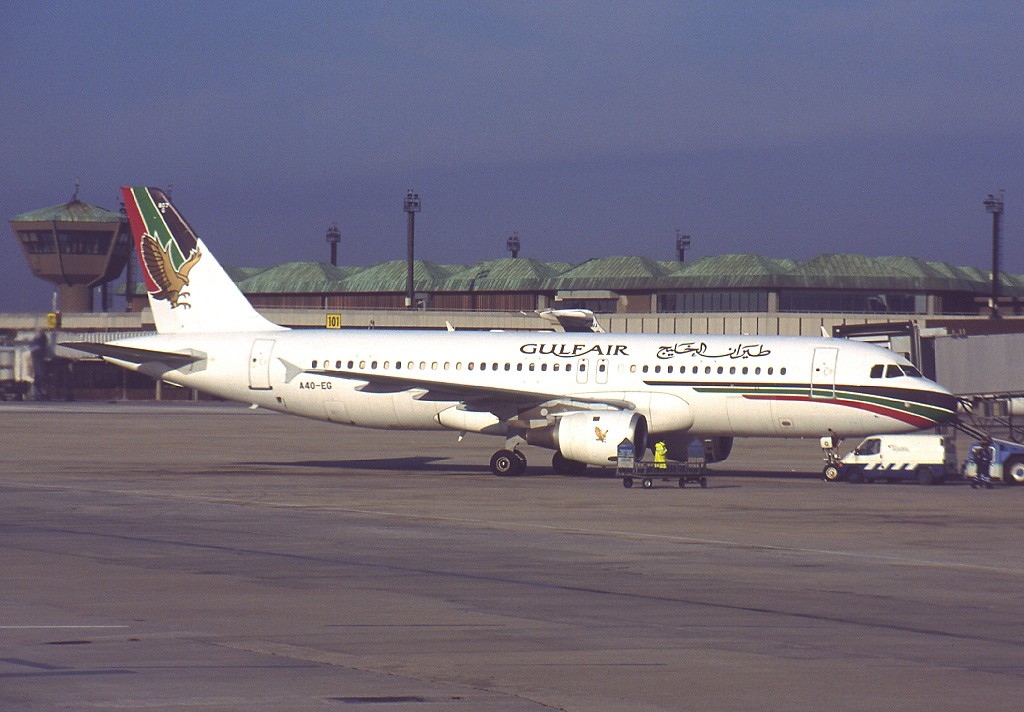
Gulf Air 72: Pitch negative
Airbus A320-212, Gulf Air AN0212197.jpg
August 23rd, 2000 A.D. The world hasn't ended (some people believed that It'll happen 1999), planes fly around it too. An A-320 with 143 passengers on board was heading from Cairo to Bahrain.
The plane was on approach to Bahrain. The speed of the Airbus was too high, though other procedures were normal.


 While on ILS and visual with the airport, the pilots decide to go around, as they were going to fast. They put the gear lever and flaps up, adding power. Shortly the crew heard a GPWS alarm. They didn't notice it, configuring the plane. After ten GPWS alarms, the plane hit waters close to the runway threshold killing everyone on board.
A three day mourning was announced. The investigation into Gulf Air 72 concluded the following things.
  1. The individual factors particularly during the approach and final phases of the flight were:
    1. The captain did not adhere to a number of SOPs, such as:
    2. significantly higher than standard aircraft speeds during the descent and the first approach
    3. not stabilising the approach on the correct approach path; performing an orbit, a non-standard manoeuvre, close to the runway at low altitude
    4. not performing the correct go-around procedure
    5. other related items
  2. In spite of a number of deviations from the standard flight parameters and profile, the first officer (PNF) did not call them out, or draw the attention of the captain to them, as required by SOPs.
  3. A perceptual study indicated that during the go-around after the orbit, it appears that the flight crew experienced spatial disorientation, which could have caused the captain to perceive (falsely) that the aircraft was ‘pitching up’. He responded by making a ‘nose-down’ input, and as a result, the aircraft descended and flew into the shallow sea.
  4. Neither the captain nor the first officer perceived, or effectively responded to, the threat of increasing proximity to the ground, in spite of repeated hard GPWS warnings.
  5. The systemic factors, identified at the time of the above accident, which could have led to the above individual factors, were:
    1. Organisational factors (Gulf Air):
    2. A lack of training in CRM contributing to the flight crew not performing as an effective team in operating the aircraft.
    3. Inadequacy in the airline's A320 training programmes, such as: adherence to SOPs, CFIT, and GPWS responses.
    4. The airline’s flight data analysis system was not functioning satisfactorily, and the flight safety department had a number of deficiencies.
    5. Cases of non-compliance, and inadequate or slow responses in taking corrective actions to rectify them, on the part of the airline in some critical regulatory areas, were identified during three years preceding the accident.

The plane flying to high went around, with a captain believing that he is pitching up to high, giving inputs so that the nose lowers. In fact the pitch was correct, but the pilots actions- incorrect. With incompete training, performing a wrong procedures.
As you see a pilot strongly believing that he is doing something right, makes the situation worse and worse. Factors such as training or bad flying habits make it worse. In addition captains aren't corrected while doing something wrong. Tired or mistaken by instruments, sometimes by senses.
A bad scenario are General aviation pilots, who fly themselves or without a second crew member. This isn't proven information, however the effect of speed, roll, pitch and yaw is stronger on a smaller plane, though jets fly faster so they might create Spatial disorientation much worse.
I believe that this is one of the barriers in aviation safety, that are quite hard to be prevented. There are warnings, alerts and other pilots, however the aviator is beaten by nature. Terrorist can be prevented, by errors of human nature in aviation can't. Some are over us, humans, who invented planes. And cause all of their crashes.
All pictures from Wikipedia.


wtorek, 24 lutego 2015

Air Crash Investigation season 14 summary, opinions and other stuff.

As a big fan of these series, I'd like to write down my thoughts, opinions remarks etc. etc. It has been a long awaited (and delayed season) of crashes and investigations. This season covered ten, along with a special.
I'm going to write about the episodes, rating them. The rating system is a numeric way, episodes receive "grades" between 1 ( terrible) and 6 (outstanding, every episode should be so).
I watched most episodes on Youtube, except Episode 8 (on TV).
Episode 1
British Midland 92
M1 plane crash
Grade: 5-
The wreck of an airliner lies between roads roughly 100m to the right of approach lights and several hundred metres in front of a runway. The wreck is broken into three large pieces, a nose section, a central section and a tail section. The tail section is turned around, the horizontal stabilizers resting in front of the wings of the central section. Wikipedia/AAIB picture
Many human beings on the planet Earth interested in aviation and are crashes complained that it's the second time an episode about this crash was made. however that one was made by Second from Disaster. The ACI (air crash investigation abbreviation) is much detailed, interesting, visually better and shows more aviation safety problems solved by BMI 92. Throught the episode you could see higher quality of the episode. The only thing not mentioned, is how the fan blade broke free, causing the engine fire. Fare enough, a very good beginning to the Season.
Episode 2
Lauda 004
Niki Lauda: Tragedy in the Air
Grade: 6
Boeing 767-3Z9-ER Lauda Air ZRH.jpg
from Wikipedia
Why six? At first, the crash is known, but not as much as BMI 92 or other episodes. The story of the crash and investigation is very detailed, explains the crash and safety hazards well. The topic, mid air reverser deployment is something important and how was it thought of before. All episodes should aim for the level of this crash.
Episode 3
Varig 254
Vanishing Act
Grade: 4+
Boeing 737-241-Adv, Varig AN0323729.jpg
Source: Wikipedia
An intriguing crash, with a very interesting story behind. I guess the episode was good, it may have lacked a more in depth investigation or too much focus on a following football match. I'm not saying it was bad or anything, it was a good episode lacking some minor things. A fact that the crew flew a five stopover flight, that may have caused fatigue could have been mentioned too. The title is also hard to understand or have anything to deal with the crash. At least, that's what I think.
Episode 4
Copa 201
Sideswiped
Grade: 5
Boeing 737-204-Adv, COPA Panama AN0197475.jpg
A crash from Panama covered by ACI is another really good episode. Not known, mysterious and deadly, this one gets a plus for the crash itself. Along with it comes a nice explanation of the crash, events leading to it, the investigations hazards and difficulties etc. There wasn't just a thing that will let me give it a 6. I don't know why ( some personal criticism, something up with me???).
Episode 5
FedEx 80 and 14
Death at Narita
Grade: 5-/4+

It is a very good idea to make people aware of cargo crashes, pilot sleep time and a situation of being a pilot. Both crashes show that. Eventually the first crash is investigated and discussed only for 3 and a half minute! And another thing, four throttles on a triple engine plane! Sort of a fail, ACI.
That is all or most complaining about " Death at Narita", an episode showing viewers ( or making them aware)  about the difficulties of being a pilot. It also brings us up the figure and characteristics of The Md-11, an underrated and sadly unpopular machine.
Episode 6
JFK jr. plane crash
JFK jr. Plane crash
Grade: 5
Piper PA-32R-301 N957T (4700040475).jpg
A well known crash, however ACI have covered it after 14 seasons. It is rare to do GA crashes, however the victims of the crash were very important personalities.
A very decent episode, good animation, well explained GA flying rules and a good examination of Kennedys Junior life before the crash. Unluckily another sad story. I don't have any remarks about the episode, it doesn't get a six, as it that special something.
Episode 7
Air France 4590
Concorde: Up in Flames
grade: 4-/4
Le Concorde impliqué dans l'accident
Not really that the episode was bad. I personally believe that Cineflix ( ACI creators) have done a very good job, just that plane crash. Again, it had more details than Seconds from Disaster, but that isn't all. Everyone interested in aviation and air crashes has heard of the Concorde disaster. In case of comparing this one to the other (rivals) programmes version, ACI have been more focused on the crash, along with no bomb theories.
The crash itself is well known and that is exactly why it received a lower mark.
Episode 8
2008 Mexico City plane crash.
Inner city carnage
Grade:4
20081105 DF Cops and buildings.jpg
Crash site
An interesting episode with a very political background. I found it decent, however I saw something a little bit weird, unusual. The animations were a little to excessive and aggressive. The planes downward spiral looked to be too violent. There wasn't as many problems with different aspects of the episode. Basically, I just didn't enjoy it as much as other episodes.

Epiosde 9
Manx2 7100
3rd Time unlucky
Grade: 5-

A crash caused by multiple problems. A lot of study into the crash. A noteworthy crash, especially the investigation. One problem I saw (or heard) were the pilots accents. They didn't pass. Just so.
All the other things were as they should have been. Another issue I had was the plane crash survivor who had an accent that I struggled to understand.
Episode 10
First Air 6560
Death in the Arctic
Grade: 5
FAB B732 C-GNWN at Cambridge Bay Airport.JPG
A lucky and unlucky crash in the cold ( to me, exotic) and superbly remote regions of Canada. A very nice initiative to do an episode about an unknown, but very compelling accident. A thing I could note, the narrator said that The 737-200 is a technologically advanced airplane, it would in 1970s and 1980s (maybe 90s), but not God damn me any kind of 2000 and freaking 11 ! So much anger in a sentence.
All pictures rom Wikipedia, Wikicommons etc.


niedziela, 15 lutego 2015

The weirdest plane crashes- Digits, numbers and sides Part 2

Aviation relies on numbers. Distances, altitudes, frequencies, heights and different calibrations. Many crashes are caused by crews, that make mistakes in the aspect of the multiple numbers, sometimes leading to crashes.In aviation you also get to deal with sides, but it's quite difficult to make mistakes in this area. Or isn't it?
Another problem is lateralization a purely psychological term. It isn't much more than an asymmetry of functionality of neither the left or right side of your body, caused by the work of your brain hemispheres ( cerebral hemispheres as Wikipedia suggests, I won't listen to it though). Important for a pilot, specially in critical situations, such as engine failure. Some pilots can't eventually judge it, flying with all engines dead, but still believing they shut down the correct engine. Eventually this has happened a lot of times. British midland 92 is a sad example of this.
Digits, they aren't as deadly, but they are a potential hazard to pilots. They can be qualified as a problem with numbers, in a way they are. Today is time for another post about air crashes, this time maybe not the weirdest ones, but caused by a tiny error. they could have been prevented, but this time there is going to be more crashes with survivors.
Same introduction, well I know. Now it is time for some different crashes. At first let's bring up the story of an Il-18 that crashed in Slovakia, due to a very basic and unprofessional mistake.
CSA 001 A Multiple Error
In 1976, the Ilyushin 18 was a successful turboprop airliner. It was still in production and in use with many countries of the Warsaw Pact. One of them was Czechoslovakia. The national airline CSA operated Il-18 as well. One of these aircraft was OK-NAB. On 28th July 1976 it was taking a routine flight from Prague to Bratislava. The plane took off after 8:52pm carrying 76 people on board. Around 9:29pm the crew  started descending. Six minutes later the ATC cleared CSA 001 to land at runway 22. At the time the Il-18 was well above the desired altitude. The captain decided to descent at a much too fast rate and this caused the plane to increase speed, noting that the plane is very close to the airport.  The pilots pulled the throttles to idle ground and deployed full flaps, hoping that the ilyushin will slow down. Eventually engine no.3 couldn't sustain the heavy braking and low power setting shutting itself down. The pilot shut down eng no.3 and no.4 at an altitude of 40 metres. The airplane had no power on the right wing and the ilyushin began banking right excessively. It flew over the airport area and fell into a dive. Shortly it hit a leisure resort Zlete Pisky.


Out of 76 people on board, only three survived. The Czechoslovakian investigators concluded that the contributing factors were:
improper handling levers inboard engines


  • reduce speed in the final stage of the final approach below the permissible limit
  •  Feathering 4. Engine
  • not inclined  plane on the side of the working engine
  • cause of the plane crash was an attempt to start the engine at low speed at low altitude
  • In general the pilot that shutdown the engine was mislead by a problem with the engine that occurred earlier. The engine 4 alarm would go on, while there was no problem. The flight engineer and the co-pilot were instructed to monitor it. In the critical situation the co-pilot thought that the engine was actually in trouble.
    Not really a crash caused  by choosing sides or numbers, but had a similar concept. I personally think that the co-pilot may have been thinking that he is shutting down a dead engine, as he didn't realize about the faulty warning. He was probably under high stress and didn't visually check the engine. He did that in the last phase of the flight, however his efforts were in vain, as he didn't have sufficient time.
    Sadly another crash caused by a very basic error, in this case not relying on your own senses, a problem with sides and bad decisions.
    Courtsey of Technet.cz
    A farely similar accident occurred in 1979, Los Angeles while a Nord 262 crashed shortly afte takoef killing three out of seven on board. The autofeather system featherd the right engine, with the crew confused and eventually shutting down the left engine. The automatic system failed due to a broken wire providing the system wrong information.  Automats might be helpful, but at times they can trigure a chain of deadly events. As in this case it resulted in the death of three people.
    In memory of all lost in these crashes.

    The weirdest plane crashes- they shouldn't have happened- Digits, numbers and sides

    Aviation relies on numbers. Distances, altitudes, frequencies, heights and different calibrations. Many flight simmers do know, that while flying you have to know all the frequencies, decision heights and calculations.Many crashes are caused by crews, that make mistakes in the aspect of the multiple numbers, sometimes leading to crashes.In aviation you also get to deal with sides, but it's quite difficult to make mistakes in this area. Or isn't it?
    Another problem is lateralization a purely psychological term. It isn't much more than an asymmetry of functionality of neither the left or right side of your body, caused by the work of your brain hemispheres ( cerebral hemispheres as Wikipedia suggests, I won't listen to it though). Important for a pilot, specially in critical situations, such as engine failure. Some pilots can't eventually judge it, flying with all engines dead, but still believing they shut down the correct engine. Eventually this has happened a lot of times. British midland 92 is a sad example of this.


    Digits, they aren't as deadly, but they are a potential hazard to pilots. They can be qualified as a problem with numbers, in a way they are. Today is time for another post about air crashes, this time maybe not the weirdest ones, but caused by a tiny error. they could have been prevented, but this time there is going to be more crashes with survivors.
    Avianca 11 Chaos
    Boeing 747-283BM, Avianca AN1396439.jpg
    On November 26th 1983 a Boeing 747-283B took of Paris-Charles de Gaulle airport. It was a six year old aircraft, leased from SAS by the airline of Avianca, the national carrier of Colombia. The jet was nicknamed Olafo, after a Scandinavian comic hero.
    Courtsey of Plane Spotters and Ger Buskermolen
    The 747 was proudly presented by Avianca. it could have been flown only by the most experienced crew. A the captains seat sat Tulio Hernandez, an experienced pilot who accumulated over twenty thousand flight hours. The First Officer was Eduardo Ramirez and the  Flight Engineer Daniel J. Laverde and Zota. the flight was routine, the plane was bound for Madrid, then continue ahead to Caracas, finishing its journey in Bogota. At total of 192 people was on board including the crew.
    The jumbo-jet took off at 22:25 GMT and ascended to flight level 370. At 0:46 ocal time the crew requested descent, 15 minutes after first contact with ATC. While at 9000 feet the crew contacted the controller that they have passed a VOR and want to proceed to CPL VOR instead of going through CJN VOR. The crew wanted to get directly to the point when they can line up with the runway and intercept the ILS. After continuing ahead to the VOR the airplane seemed to turn directly to an ILS marker (MA) before reaching the VOR. At 1:03 the crew was cleared to land. However at 1:06 am the 747-200 hi the ground already configured for landing. 181 passengers and crew perished with 11 of them surviving.

    The wreckage was found soon after the crash. The Jumbo Jet impacted ground 12km southwest of Barajas airport. The planes undercarrige and wings were upside down, due to the nature of the impact. The plane hit the ground thrice, resulting in an excessive rollover and crash upside down.
    The CVR was badly burnt, but working, with the FDR in good condition.
    The investigators analysing the crash were CIAIAC experts. CIAIAC is a governmental organisation.
    They concluded that:
    "A) The Commander and crew were properly qualified and experienced.

    b) . b) The pilots were qualified, experienced and physically fit properly.

    c)  The airplane had the Airworthiness Certificate, Certificate of Registration and Certificate of valid Maintenance. . Records show that it had been maintained in accordance with the approved maintenance program.

    d) The aids to navigation and approach working properly, according to the findings made.

    e) There is no record of malfunctions in communications equipment and ATC radar.

    f) In the investigation, no evidence of abnormality was found in the operation of engines and aircraft systems.

    g)  The weight and balance of the aircraft was within prescribed limits.

    h)  Between Barahona and the beginning of the shift to MA, the crew did not timely, so he made a wrong navigation.

    i)  The crew flew below the minimum sector, more than a minute before entering the area of ​​protection of CPL.

    j)) The crew took the train out of sequence, in advance, according to ILS approach procedures, and before starting the shift to MA.

    k) The crew made the shift to MA and continued his flight until impact, without verifying the distance CPL, nor have captured some of the ILS signal system; leaving him only the ADF dials.
    l)  The commander accepted without checking for its part, the wrong altitude MA bypass given by the co-pilot.

    m)  The commander did not take adequate corrective action when proximity alarms were activated enters the GPWS)

    n) The ACC controller transferred the aircraft to APP in different time and place as agreed.

    o)  The APP controller, upon the transfer of traffic, gave no precise positional reference, or TWR or aircraft.


    p) The Controller TWR APP transferred to the aircraft without having received confirmation speaking crew intercepted some help for approach or had visual reference.

    q) The APP controller not kept proper surveillance radar, by failing to communicate to the aircraft "radar service terminated".

    r)  The wording and communications procedures used by both pilots as the crew did not meet recommended by ICAO ".
    Intially the Cause was:
    "The cause of the accident was that the Commander, without precise knowledge of its position, went to intercept the ILS with a wrong path, without initiating the maneouver published instrument approach, descending below all the safety margins of the area, to collide with the ground. "
    However contributing factors were:
    "A) inaccurate Navigation crew, which led them to the wrong position to start the landing approach.

    b)  Lack of corrective action, in accordance with the operating instructions of system ground proximity warning (GPWS), by the crew.

    c)  Lack of teamwork in the cockpit.

    d)  inaccurate information given to the aircraft position by APP.

    e) The Controller of APP, by failing to communicate to the aircraft "radar service terminated" not kept proper observation of the radar screen. "
    The "descend(ing) below al the safety margins of the area" was caused by the first officer giving the captain a wrong MDA of 2380 feet, instead of 3280 feet. A tiny mistake, but how crucial. Due to the chaotic behaviour of the crew nobody spotted that error, therefore leading the crew to  make wrong decisions ever after. As the pilots had to deal with a lot of frequencies, barometric pressure setting and calculations may have easily made an error, within very chaotic condition.
    A thing I noticed is that the crew may have been fatigued, stressed or in a rush ( or they were tired, and therefore stressed, it could have been combined). from the technical point of view, even one of the three pilots might have been in not the best conditions and the others ok. That is still 33, (3) precent of the crew not working at his best.
    Sadly a similar accident occured 14 years later when a 747 crashed on Guam due to the captain being tired and causing the plane to descend under the glide slope. The plane hit a hill, killing 228 out of 254 people on board.
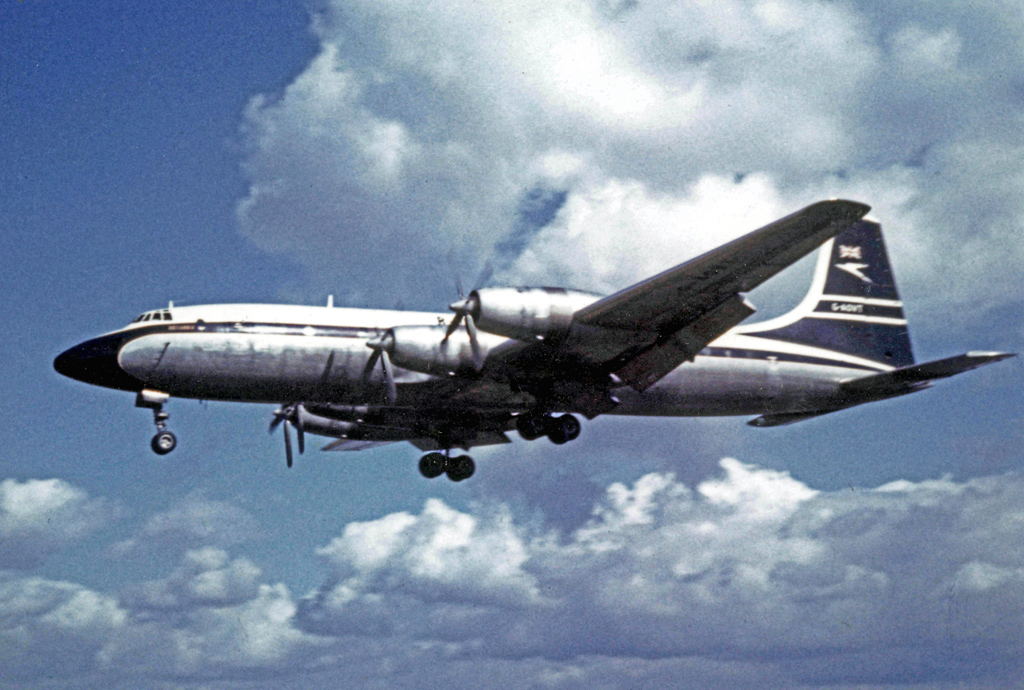
    158 BOAC Bristol Britannia Crash
    A Matter of Thousands
    Bristol 175 Britannia 312 G-AOVT BOAC Ringway 04.08.62 edited-3.jpg
    In the 50s the aviation business was growing. In 1958 the very first jets were already in service, this being the Comet, Tu-104 and Sud Aviation Caravelle entering service. Turboprops and props were still the most popular planes in the sky. One of the newest turboprops was Bristol type 175 Britannia, shortened Bristol Britannia, a turboprop as big as the 737 NGX. Introduced a year earlier, it first flew in august 1952.In 1954 and 1957 two prototypes crashed due to an engine problem.
     On Christmas eve 1958 a Britannia was tasted by BOAC to renew its Airworthiness certificate ( in normal language, it needed a certificate, so that it can legally fly). The day was very foggy, making it hard to fly. The aircraft took off  London Heathrow airport at 10:10 am, carrying seven passengers and five crew, bound for Hurn Airfield. After the test was complete, at 11:55am the crew carried out a landing request at Hurn. However after three minutes ATC lost contact with the Bristol. The controller contacted emergency services giving them the last known position of the airplane. Some people in the towns of  Winkton, Sopley and residents of Bransgore contacted them as well, claiming to have heard a low passing aircraft or a sound of an aircraft crashing. The wreckage of the plane was found. Nine people out of twelve on board have died in the accident, with three surviving.
    investigators concluded that this crash was a typical CFIT. The cause of a CFIT was however out of the ordinary. The final report on this crash explained that:

    A similar altimeter was used (three point altimeter).
    "The accident was the result of the aircraft being flown into ground obscured by fog. This was caused by a failure on the part of both the captain and the first officer to establish the altitude of the aircraft before and during the final descent. The responsibility for the accident must rest with the captain. The height presentation afforded by the type of three-pointer altimeter fitted to the subject aircraft was such that a higher degree of attention was required to interpret it accurately than is desirable in so vital an instrument. This, when taken into conjunction with the nature of the flight on which the aircraft was engaged was a contributory factor."
    Yes a three point altimeter can be dangerous. If you don't take into account the position of even one of the indicators or think that the indicator showing thousands shows hundreds.
    The crash of  a BEA Vickers Viscount was quite similar, when the plane on approach to Prestwick crashed, luckily everyone survived.
    Boeing 727-22, United Airlines AN0224285.jpg
    Passengers and crew of United airlines flight 389 weren't so lucky. While flying from New Yorks La Guardia airport to Chicago on August 195, their airplane crashed. The airplane used on this flight was a Boeing 727-200. The crew was cleared for descend to 6000 ft. However at that altitude the pilots didn't level the plane, instead continuing their descend. Shortly after the plane impacted waters of Lake Michigan, killing all on board. The FDR was never recovered, however the investigators suspect that a same altimeter problem could have caused the crash. Officially:
    "The Board is unable to determine the reason for the aircraft not being leveled off at its assigned altitude of 6,000 feet."
    Now that we use different altimeters, pilots can judge the altitude in a better way. In addition the GPWS helps crews to fly stop the dangerous descend. We're quite lucky to have sophisticated warning systems to prevent these crashes.
    In memory of all lost in these crashes.


    sobota, 14 lutego 2015

    The weirdest plane crashes- they shouldn't have happened-Birgenair 301.

    I think everyone would say that plane crashes are horrific. But what adds to them being more horrific is a weird cause, for example plane crash caused by a ..... wasp, sticky tape or changing two numbers.
    Well, I decided to write about some of them. At first a stuning cause.
    Birgenair 301 The killer wasp
    It was February 6th 1996. A Boeing 757-200 was preparing for takeoff in Peurto Plata, Dominicana.
    The 757 was owned by Birgenair, a Turkish airline from Instanbul taking German vacationers to Frankfurt via Gander and Berlin. Along with Germans, 9 Poles were aboard. The crew consisted 11 Turkish and two people from Dominicana. There was a total amount of 189 people on board. The captain was Ahmet Erdem, a 62 year old veteran, the co-pilot was Aykut Gergin, a 34 year old novice to the Boeing 757. There was also a relief pilot, Muhlis Evrenesoğlu (51).
    Birgenair tcgen.jpg
    From Wikipedia
    At 11:42 the plane taxied onto the runway and took off. During the takeoff roll  captain Erdem noted that his Speed indicator isn't working. He told the First officer to give him the speed readings, he didn't decide to abort it. The 757 became airborne at 23:43. The next two minutes of the flight were normal, until the captain noted "there is something wrong there are some problems". He soon reminded "okay there is something crazy do you see it, there is something crazy there at this." pointing at the speed indicator. After telling the first officer about the developing crisis, Gergin suggested to check the circuit breakers. For a minute they were trying to find a cause of the malfunction, while numerous alarms warned the crew. The captains airspeed indicator showed a low speed, while the first officers indicated a speed of around 350 knots. The autopilot wanting to decrease the speed increased the pitch and reduced the power. Moments later the stick shaker alert activated. The autopilot disengaged itself leaving the crew confused. Due to the high pitch the engines stopped, they couldn't get the needed airflow to keep them running. The situation got even worse, with the pilots puzzled about what to do. they were trying to prevent  a crash., however they efforts were all in vain. Everyone on board perished in the accident. An investigation was sent to investigate the crash.

    Crash Animation from Wikicommons.
    The investigators concluded that the cause of this disaster was:
    "The crew's failure to recognize the activation of the stick shaker as a warning of imminent entrance to the stall, and the failure of the crew to execute the procedures for recovery from the onset of loss of control."
    However this isn't all to the story. The cause of the stall was an action of the autopilot. The autopilot having its brain and knowing how to deal with problems decided that the plane is flying too fast and in order to slow it down pitched the airplane up and decreased the power. The cause of the abnormal readings was a pitot tube blockage. Investigators said that the blockage was most probably caused by a wasp nesting inside the component. Birgenair initially explained that: "was not on the ground for 20 days, but only for 12 days prior ill-fated flight. The pitot-tubes were covered prior to an engine test run which took place 2 days prior to the ill-fated flight. It was known by the Birgenair mechanics that the airplane should be returned to Turkey in a ferry flight within the next 3 days. If therefore the pitot-tubes had not been covered after the engine test run for 2 days, according to the Boeing procedures, set forth in the Boeing Maintenance Manual. This might be justified".
    The next thing, pilots. The captain was very confused about the speed, he still didn't exactlly know it, while the Boeing was approaching a stall speed. Iventally the other crewman decided, aware of the situation didn't want to question the captains decisions. He is the most experienced pilot in the airline, he knows what he is doing. Such thinking may have led the crew to keeping quiet. Now, from the technical point the cause was maintance error and pilot error, however the crash wouldn't have happened if the wasp didn't nest in the pitot tube. Quite upsetting, that the airplane with nearly two hundred people was brought down by a tiny insect, but also that we as humans couldn't prevent it. As always the crash had been caused by human error, again human beings have designed planes. That I why they are always to blame even in the tiniest bit.
    This year another 757 crashed due to a similar problem, the pitot tube on Aeroperu 603 was blocked by sticky tape. This gave pilots wrong indication of their sped altitude and heading causing them to crash into the Pacific Ocean killing all 70 people on board.
    The next crash is probably going to be Avianca 11 or some crashed caused by lateralisation problems.


    In memory of all killed in both accidents.