sobota, 11 kwietnia 2015

About dangerous, challenging or weird airports that aren't so well-known (Daily Updated)(Latest airport: Melville Hall)

Have you ever read about some dangerous airports? If yes, then you have probably heard of Lukla,Kai Tak, maybe Innsbruck or Saba.
This list (no order) features some of less known, but nonetheless weird, dangerous or challenging airports. Some have very complicated, interesting or unusual approaches. I'll try to do about 5 airports each day.Hope you like it and BTW please:
Write some nice comments about what topic(s) should/could I cover.
No.1 London City Airport (EGLC)
London City Airport Zwart.jpg
From Wikipedia

From Wikimedia.
The airport is located in the middle of a financial district in London, just 11km from City of London.
Bulit in the 80s in an area that used to be a dock, London City airport has one 1508m runway with a 5.5 degrees steep glideslope! Initially it was designed for Dash 7 aircraft. Today we can see E-170 to -195, Avro RJs, A318s, ATRs,Saab 2000s, Bae Jetstreams, Do328, Q400s, CRJs and Cessna Citation or Hawker Raytheon type of bizjets. In adittion, crews require special training and limits of noise, due to the proximity to homes. Another challenge is slowing down, as planes approach in a steep angle and gain speed, then having to slow down on a relatively short runway. In 2007 the airport operated 2.9 million passengers and an expansion is planned for 2030.
If you're a flight simmer, you can get UK2000s EGLC payware scenery for FSX and Fs2004.
No.2 Aspen-Pitkin County Airport (KASE)
KASE RWY33.jpg
From Wikipedia.

An overview of the airport and 2001 Avjet crash site location photo by NTSB.
This Colorado airport is elevated at more than 2300 metres and has a challenging (not as much as London City) visual approach through a mountainous area and a difficult IFR approach- LOC/DME to runway 15. Planes usually land only on runway 15, due to high terrain surrounding the area close to runway 33.Sometimes you get quite bad weather conditions, with very strong winds, turbulence and nigh snowfall. The runway is quite long, however design of the airport causes a problem. Only aircraft with a wingspan of less than 29m can operate on the airport due to the taxiway design. There are a few weird restrictions such as departures premmitted after 22:30, because of the proximity to houses and noise level. The Concorde could make it here, as the SST has a 25m wingspan.It's a popular GA destination, but airlines like Delta connection or American Eagle fly small planes like ATRs or CRJs to Aspen.
For simmers, you get a nice, cheap package from Aerosoft, unluckily FSX only.
No.3 Queenstown Airport (NZQN)
Queenstown Airport view from Deer Park.jpg
From Wikicommons.

Source:Wikimedia
This airport located 10km from Quenstown's city centre was first used in commercial aviation in the 50s and 60s, when Dc-3s flew scenic routes. The airport located close to mountains and approaches take pilots some 2000 feet over them. Queenstown airport has two relatively short runways- 1900m long 05/23 and 900 metre long- runway 14/32. Another problem are winds, causing turbulence and making landings and take-offs challenging.  The main runway is 30m wide, whereas usual runways are 45 metres. On the other hand, in beautiful weather passengers and pilots can have a pleasing flight in and out of NZQN. This airport is usually operated by 737-800, ATRs or A320s. Queenstown airport came 7th in Privatefly.com's competition for the most amazing approach in 2011.
ORBX has made a Queenstown scenery for P3D and FSX, which seems a little bit expensive to me, however it's ORBX and their products are always very high quality.
No.4 Sao Paulo Congonhas (SBSP)


From Wikipedia

Source: Wikicommons

Source:Wikipedia
The airport is located just 8km from the city center of South America's largest city.
Built in the 30s, the airport was in fact the third busiest for cargo in 1957. Since Guarulhos airport has opened, Congonhas has lost popularity and with infrastructure being built around it became dangerous. The airport has two runways, one 1940 and the second 1435 metres long. Both end with a road and buildings. They can't be extended, because of this fact. Sao Paulo is a rainy place and a slippery runway of this length is a challenge for pilots. The approach or takeoff procedure aren't really hard, however stopping and accelerating on the runway is. In 2007, a Tam Linheas Aeras flight has crashed on a rainy day, due to pilot error, overrunning the runway and killing 199 people. The airport is operated mainly by A320s, 737s, Fokker 100, Embraer aircraft and ATRs, however it used to operate cargo A300 and Boeing 767-200s. The airport is in fact no longer international.
Flight sim fans get a great free scenery of this airport found on TerraBrasilis (FSX and P3D. TropicalSim have released a payware rendition (same sims). Xplane 10 has got one, too:http://forums.x-plane.org/index.php?app=downloads&showfile=25481.
No.5 Matekane air strip (FXME)
Matekaneairrunway.jpgFrom Wikipedia.
This small airport located in Lesotho, a country surrounded by South Africa. One of it's airstrips in the Matekane village ends with a sharp ridge. Matekane lays at an elevation of 2 300m and has a short 400m runway. The biggest planes landing their are usually Cessna 172 type of aircraft, though it is sometimes accessed by Cessna Caravans or Twin Otters. To wrap it up, FXME airport is frequently windy and unpleasant for pilots.
Aerosoft has released a nice package of dangerous airports, consisting Matekane. Try it out for 16 dollars.
No.6 Billy Bishop Toronto City Airport (CYTZ)
Toronto City Center Airport.jpg
Wikicommons photo.

Courtsey of Wikipedia.
Built in the 30s on an Island next to the city centre, a former military area for the Norwegian army and a matter of debates about distributing the area around Toronto, it's a weird and challenging airport. It has three runways, that are from 900 to 1200m long. The airport is operate by Dash 8s, CRJ and possibly CS100. Due to the proximity of the city, approaches at night are problematic, due to the sound emitted by planes. There are 10 000$ fines for flying an airplane to CYTZ after  11pm. The approach has a very "swinging" profile. This isn't such a dangerous, but nonetheless weird airport. The RNAV and ILS/DME runway 8 approach is in the path of CYYZ arrivals and departures, however it doesn't cause any mid-air collisions.
There is one FSX, P3D and Xplane 10 payware Torornto City scenery:http://finalapproachsim.com/product/toronto-city-airport-fsxp3d-download-2/. Quite a decent price, 20 us$, though the quality isn't great.
No.7 Melville Hall airport (TDPD)

Photo used with permission.
Located just 2mi. northwest of Marigot, Dominica, this airport isn't the safest, nor easiest. Bulit in 1944, throught a


poniedziałek, 6 kwietnia 2015

Is the Dreamliner really so Awesome?

The Boeing 787 Dreamliner is a long-range, mid-size wide-body, twin-engine jet airliner developed by Boeing Commercial Airplanes.
This is the Wikipedia (http://en.wikipedia.org/wiki/Main_Page) description of one airplane I'm going to talk about. What should I say? The "Dreamliner" really pisses me off. Yes, it does. The media make the Dreamliner the greatest plane ever and get really excited about it. In adittion, when the Dreamliner has problems or other difficulties, they make it a big event. Yesterday a LOT 787 had to come back from Warsaw Okęcie airport due to turbulence. Some smart person commented, that there would be no news, if the plane was for instance different. I agree.  Technically the Germanwings crash made media talk more about air crashes.
Know, I really want to see, if the dreamie (that's how I'll call the 787) is soo good (KFC, life tastes great).The list is going to be full of numbers. Some information might not be exactly 100% correct, but I tried my best researching. The first categories are a little bit messy, but since the third, there is a table showing the specifications.I'll compare it with the A330-300, A340, 777-200, A350-900, 767 and Il-96. The Il-96 is just for fun. Let's see.
 BTW
1.Please write some constructive comments about some posts I could do. Please give me some topics to cover, etc.  It really motivates me! :D
2. Write down your opinions about the 787 in the comment section please. Do you think it's so great? Do you agree with the "result"of the comparison? etc, etc. Thank you.

Avionics, pilotage, crewman.

Dreammies cockpit photo taken from Wikipedia.
FMCs, FBW, EICAMSes, MFDses. Typical boring modern cockpit. The difference between A330, 340 and 777s is that the displays are more functional and a the layout of displays is just a little bit comfortable for pilots. On the other hand there isn't a lot of blank space. The dreamie is better, but yet again not so much as some people expect it to be.
The A350 XWB is different, having a similar type of displays, however Airbus keeps the typical joystick where it usually is in modern Airbuses. The CDU (FMC), whereas the buttons are on the side. Dreamies keep the usual Boeing 777 design. Other than that, the overhead is very similar. All in all, the 350 has no yoke and is more spacious.
 A350 cockpit. Source: Wikipedia and Joao Carlos Medau
The 767 is much older, but yet again the cockpit uses some(but eventually very little) glass styled instruments, the overhead is quite similar. The 767 isn't better. Let's face it, the Boeing 767 is now old. The Il-96 (-300) needs three crewman. Ups, fail. Then again, it has a lot of good, sturdy avionics. Eventually, most gauges are in Russian. The 787 is way better.

Il-96 cockpit.
Overall, the 787s cockpit is quite decent. It is some more better than the A330/340 and Boeing 777. Some other large jets, Ilyushin 96 and Boeing 767 are also worse than this airplane. However the A350 XWB might make you feel like it's the more advanced plane. in the end I in a way understand the fact that people get excited by dreamies avionics.
Passenger capacity
An average Dreamliner carries about 270-290  (290-max. for the 787-8, 270min. for the 787-9).

787-8 interior. Source:Wikipedia
Average A330 can carry from 250 to 375(rare 330-300 configuration) passengers. The average is 312 (312.5 actually). All in all the 787 and A330 are quite similar, with the airbus being slightly (very slightly) better. The thing is that the A340 (most versions) are bigger than 787s. The smallest 340, -200 version carries around 270 passengers.
The Triple Seven is a little bit different. The Dreamliner was designed to replace the 767. Indeed not the triple seven. The larger -300 version takes up to 380, whereas the 787-9-310.
Aircraft landing approach. Side view of twin-engine jet in flight with flaps and landing gear extended.
Random 777-300ER picture. From Wikipedia.
A350 XWB is pretty much the same as the Dreamliner. However, having a little bit more space in the cabin, I guess passengers might prefer the XWB. The difference is yet again quite small, but IMHO the A350 is better.
The Il-96 interior picture taken from Wikipedia.
The Il-96 isn't as good as the XWB. A typical Il 96-300 carries around 240 people on-board. A 2-4-2 seat layout is also possible. I don't think anyone will need this information, as only 29 Il 96 airplanes were built. The 767-400 carries only 250, being bigger than the 787-9 and -8. Definently another sign showing, that the dreamie replaces the 767.
All in all, the dreamie isn't really shocking in case of passenger.Nothing special. The A350 and 777 are slightly better, along with the Airbus A330 and 340.
Takeoffs and Landings
The Dreamliner's MTOW is 228 000 kg. The takeoff distance at MTOW is around 3 000 metres. The 787-9's requirement is a 2 900 metre runway to takeoff. The 787-9's MTOW is 253 000kg. A 787-8 requires a 1650 metre runway for landing at MLW (maximum landing weight-I'm not sure if such an abbreviation exists) of 172 000kg. The -9 version needs around 1800m of runway to land at it's MLW (193 000kg). These are just facts, remember.
787-9 picture by BriYYZ from Wikipedia.
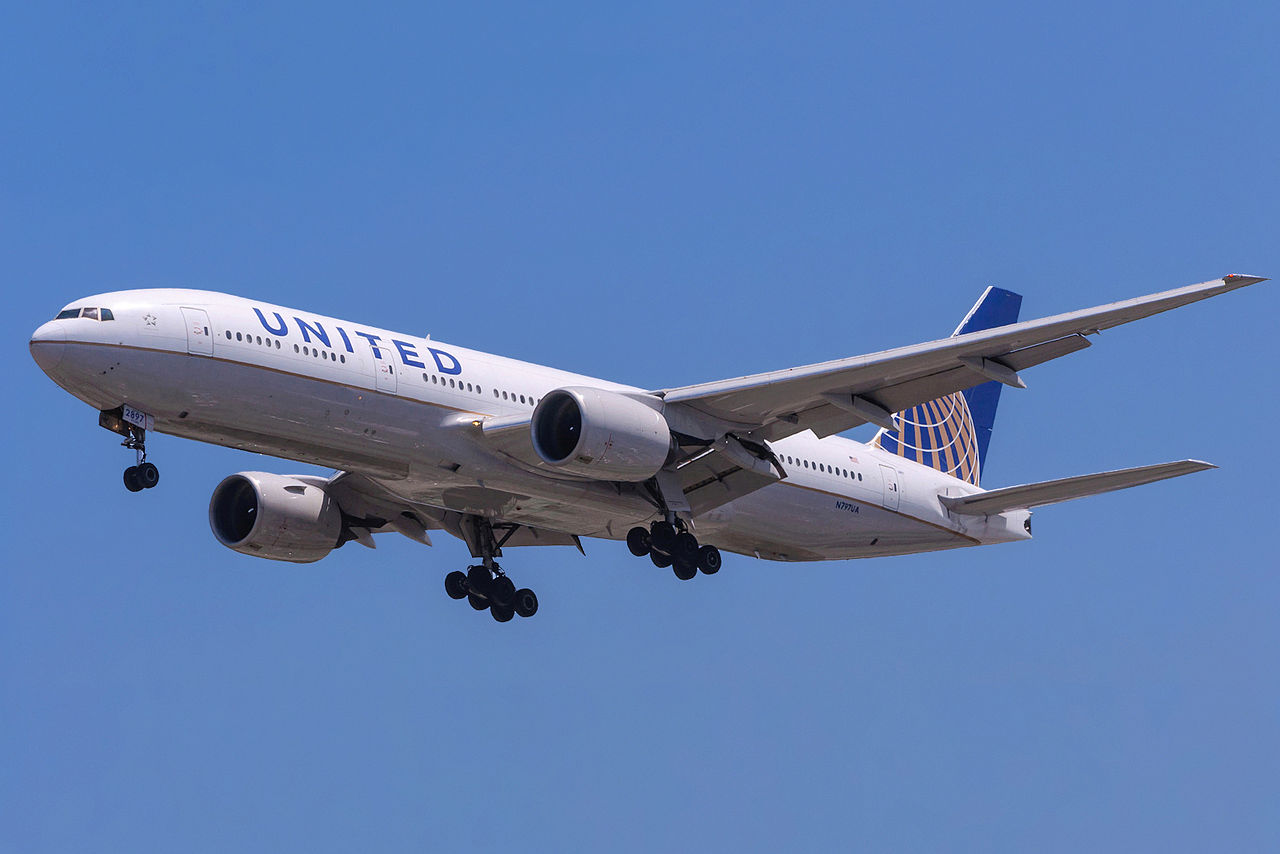
Here comes the A330-200, with a MTOW of 242 00kg. The T/O (takeoff) distance is 2 770 m. It looks as the dreamie isn't so awesome. However, I understand the MTOW difference, as the A330-200 is slightly bigger than the 787-8.  The -300 series MTOW and T/O distances are the same as with the -200. Not the best achievement. All in all, both A330 and 787 are similar in case of takeoffs. With a MLW of 182 000kg, the A330-200 needs around 1 800 metres of runway to land. The -300 series and -200F has a MLW of 187 000kg, but has the same landing distance of 1 800m. Again, the 330 and 787 are very similar. Kind of a draw, however the dreamie is much younger and meant to be better than a 90s widebody jet from a rivaly company.
My favourite Airbus -A340 is quite similar to the 330. In case of MTOW, the smallest one- A340-200 can takeoff at a weight of 275 000 kg. Considering the size, better than the Dreamliner. The -300 version's MTOW is 276 500 kg, I thought I'd be something around 290 000 kg. Compared to the Dreamie, it's a mediocre score. I won't tell you about the -500 and -600 series, as they are much larger than the 787, and it doesn't really make sense to compare them. The T/O distance for an A340-200 at MTOW is 2 990 metres, whereas the 300-3 100m.

Small A340-200.
Courtsey of Wikipedia and Anthony Noble.
The A340-200's MLW is 185 000 kg, and the -300-190 000. The A340-200 needs 1 900m, whereas -300 2 000 metres. Again, not a STOL airplane. The A340-200 being similar sized to the 787-9 requires a runway of similar length, however can land being heavier than the rival. It looks like a draw.
The 777-200 (-300 is too big) has a MTOW of 247t and the T/O roll distance (T/ORD is the abbreviation I made up) of 2 450m, the -200ER series- 297,5t and with a 3 380m T/O distance, whereas the -200LR-347 500kg. The -200LR's takeoff distance is 2,8km. With an impressive MTOW, the takeoff roll distance of the -200LT version beats the 787-8! That isn't agreat improvement Boeing.
Now study the 777-200 MLW; the first one is the -200, -200ER, and then -200LR:
Maximum landing weight445,000 lb
(201,840 kg)
470,000 lb
(213,180 kg)
492,000 lb
(223,168 kg)
The MLW landing distance, beginning with the -200, -200ER and then -200LR:
Landing field length (MLW) m (ft) 1,550 (5,100ft)
Landing field length (MLW) m (ft) 1,615 (5,300)
Landing field length (MLW) m (ft) 1,600 (5,250)

Aircraft landing approach. Front quarter view of twin-engine jet in flight with flaps and landing gear extended.


Majestic looking 777 Source: Wikipedia

Looks very good, beating a lot of other airplanes. No wonder why the 777 doesn't have to be replaced.
What about the A350-900? Good question.
Maximum takeoff weight268 t (591,000 lb)
Maximum landing weight[146]205 t (452,000 lb)
The MLW is quite impressive, whereas MTOW-not so much. The T/O distance is 2 830m, quite similar to the Dreamliner -9.
The MLW landing distance is only 1300m! I couldn't believe it at first however it's achievable.
What about a fun Il-96?
Large tail, winglets and cool engines. Il-96 in Beijing.
Credit: Mark Tang and Wikipedia.
Max. Landing Weight183,000 kg (403,083 lb)220,000 kg (484,581 lb)
Max. Take-off Weight250,000 kg (551,000 lb)270,000 kg (595,000 lb)
                                      -300 version                    -M version
This aircraft isn't as popular as the Dreamliner, however the specifications of this plane are a little bit better, especially with the -300, which is nearly the same size (not shape) as the typical Dreamliner (787-8).
With the same order as above, I'll show you the Il-96 T/O and landings specifications.               
MTOW T/O roll distance: 2 340m (96-300) 3 000m (96M)
Landing distance (not quite sure if it's MLW) 900m (!) 1 800m


The landing distance for the -300 is quite impressive. The M versions specs aren't as good. It may be bigger and the avionics- improved, however the landing and takeoff specifications not.


350,000 lb
(158,760 kg)


412,000 lb
(186,880 kg)


450,000 lb
(204,120 kg)
      
767-300          -300ER          -400ER            


That is the 767s MTOW.
7,900 ft (2,410 m)8,300 ft (2,530 m)8,600 ft (2,621 m)10,200 ft (3,109 m)
Now the T/O roll distance for the 767 models as above.
767-300 variants MLW:

767-300: 136 078kg 767-300ER: 145 150kg.
The 767-400ER can land weighing 158 757 kg.
The 767-300(ER) can land at a 1 800m runway at MLW and the -400ER-2130m.
All in all, in the end the dreamie's score isn't impressive. it isn't a STOL airplane, it isn't a revolution incase of landing and takeoff economics. It's good. Just good.


czwartek, 2 kwietnia 2015

About a few ridiculously big aircraft that didn't do much flying. Part 1

There are a lot of large aircraft flying. For instance let's look at the example, Antonov An-124.One of the larger planes ever. How many of them were built? 55. You might consider this a big number, however for example: Cessna 172- around 43 000 examples, over eight thousand B737, Flying Fortress- over 12 thousand. Ok, let's go back to big planes. 1502 Boeing 747s were built. Right, another large plane, the Airbus A340 (my favourite Airbus). Throught 20 years 377 were built.
Not all monstrous, gigantic and scarily big were so lucky. Some are old, some are relatively young projects. However they were all unsuccessful.
The list is in no order, it follows no rules of logic. Aircraft are limited to 5 being built.
BTW
Please write in the comments, about what would you like me to do a post about. I have a leak (not really) in my brain, therefore I'm losing inspiration. Just a little bit, don't worry.
I'll try to do part 2, but I'm a little bit busy/lazy/lacking inspiration. Write down some aircraft that I can write about in Part 2.
:D
No.1. Nakajima G10N (0 built)
The Fuji Monster
nakajima_g10n_by_tr4br-d3i9km0.jpg
Painting from Wikipedia.
Nakajima G10N Fugaku. - En 1943 Nakajima por cuenta propia, inicio los estudios de un avión que fuera capaz de atacar territorio norteamericano en el otro lado del Pacifico, fue denominado Proyecto Z, como era de esperar, se reflejaría en el B-29 para iniciar el proyecto dado que este tenia el alcance y el resultado necesarios para llegara a territorio Japonés. El proyecto Z llamó la atención de los militares y la concepción dados ya reunidos por Nakajima sirvió de base para una petición común por parte de la Marina y el Ejército Japonés. Inicialmente Nakajima previo equipar el avión con motores de gran poder como el motor radial Nakajima Ha-505 de 36 cilindros (5.000 hp cada uno), tres en cada ala; sin embargo se vio que tales motores no estarían disponibles, así que se utilizaría los motores radiales Nakajima NK11A, cada uno desarrollando 2.500 hp. Definido esto, el ahora designado G10N1 Fugaku comenzó a surgir en la tablilla de los ingenieros. Basándose en un B-29, el G10N1 seria capaz de tomar un cargamento de 5.000 kg de bombas hasta los Estados Unidos y a continuación aterrizaría en Alemania. Para misiones más cercanas, el cargamento de bombas podría llevar hasta 20.000 kg, ellos como se mostraba las estimaciones, el G10N1 seria un avión muy impresionante, con cuestiones muy similares o incluso sobrepasando al mismo B-29. Sin embargo la cuestión fue si los japoneses estarían dispuestos a destinar los insuficientes recursos de guerra para la construcción de tan enorme avión, a la cual no eran completamente exactos de su utilidad para la situación de entonces. A diferencia de otros proyectos de grandes bombarderos en los cuales los Japoneses como el Kawasaki Ki-91 y el Nakajima G8N Renzan (que ya casi estaban en la línea de vuelo), el G10N1 permaneció solamente en el periodo de proyecto avanzado cuando la guerra llego a su fin. El G10N1 Fugaku no fue codificado por los Aliados, el proyecto Z fue cancelado en julio de 1944 y el Fugaku jamás fue construido. <BR> <BR>Dibujo del Nakajima G10N1 Fugaku: <BR><A HREF="http://www.afwing.com/intro/newyork/5.gif" TARGET=_top>http://www.afwing.com/intro/newyork/5.gif</A> <BR> <BR>Características: <BR>Nakajima G10N1 Fugaku. <BR> <BR>Tipo: bombardero pesado de largo alcance, de seis a diez tripulantes. <BR>Planta motriz: seis motores radiales Nakajima Ha-54 enfriados por aire de 5.000 hp cada uno. <BR>Prestaciones: velocidad máxima 780 km/h; techo de servicio 15.000 m; alcance máximo 19.400 km. <BR>Pesos: vacío 42.000 kg; máximo en despegue 122.000 kg. <BR>Dimensiones: envergadura 63,0 m; longitud 46 m; altura 8,8 m; superficie alar 330 m2. <BR>Armamento: cuatro cañones Tipo 99 de 20 mm ubicadas en torretas dorsal, ventral y cola, mas una carga máxima de 22.000 kg en bombas. <BR> <BR> <BR>Saludos a todos y gracias por los post. - Fotolog 
From Fotolog by IJN 75


From Wikipedia

Japan faced problems with one type of aircraft during WWII. They never built an efficient strategic bomber. There were a few companies making aircraft, but the main one that wanted to finish the task of building a strategic bomber was Nakajima. In 1941 they first flew a plane called G5N, based on the DC-4. The specifications were quite decent, however the range was insufficient. Another, better, but smaller (sized) project was G8N. Again, the range didn't meet the expectations. 
Nakajima didn't give up. They began work on a project called Project-Z. The plans were quite decent, but none sufficient engines were found, changing the design a little bit. It still was stunningly big for an WWII airplane. The G10N Fugaku (mount Fuji, sounds scary) was approved by the Japanese military. The project was enormous. It's capabilities were quite impressive for it's times. Even now they are very good.
General characteristics
  • Crew: 6 to 10
Fugaku: 7 to 8
  • Length: 44.98 m (147 ft 7 in)
Fugaku: 39.98 m (131 ft)
  • Wingspan: 64.98 m (213 ft 2 in)
Fugaku: 62.97 m (207 ft)
  • Height: 8.77 m (28 ft 9 in)
  • Wing area: 352.01 m2 (3,789.0 sq ft)
Fugaku: 330 m2 (3,552.09 sq ft)
  • Aspect ratio: 12.1
  • Empty weight: 65,000 kg (143,300 lb)
Fugaku: 33,800 kg (74,516.24 lb)
  • Gross weight: 122,000 kg (268,964 lb)
Fugaku: 42,000 kg (92,594.15 lb)
  • Max takeoff weight: 160,000 kg (352,740 lb)
Fugaku: 70,000 kg (154,323.58 lb)
  • Powerplant: 6 × Nakajima Ha-54 36-cyl. air-cooled radial piston engines, 3,700 kW (5,000 hp) each at take-off
Fugaku: 6x Nakajima NK11A 18-cyl. air-cooled radial piston engines developing 2,500 hp (1,864 kW) at take-off
  • Propellers: 6-bladed contra-rotating constant speed propellers, 4.5 m (14 ft 9 in) diameter
Fugaku: 4-bladed constant speed propellers 4.8 m (16 ft) diameter
Performance
  • Maximum speed: 679 km/h (422 mph; 367 kn) at 10,000 m (32,808 ft)
Fugaku: 779 km (484 mi)at 10,000 m (32,808 ft)
  • Range: 17,999 km (11,184 mi; 9,719 nmi) maximum
Fugaku: 19,400 km (12,055 mi)
  • Service ceiling: 15,000 m (49,213 ft)
  • Wing loading: 456.99 kg/m2 (93.60 lb/sq ft)
Fugaku: 211.89 m² (43.4 lb/ft²)
Fugaku: 0.118 kW/kg (0.07 hp/lb)
Armament
  • Guns: 4× 20mm Type 99 cannon
  • Bombs: 20,000 kg (44,092 lb) of bombs
In the autumn of 1943, works on production facilities began. The project wasn't however considered so important, many top Japanese engineers didn't work on it at all, or where moved to different projects. The US army was closing Japan, different aircraft were more important and project abandoned. The documentation of the plane was obviously destroyed.
No.2 Convair  XC-99 (1 built)
Oversized B-36
Convair XC-99
Photo by USAF from Wikipedia
 Source: Wikipedia and USAF


Based on the B-36, it was the biggest piston engine powered airplane, only smaller than the Hughes Hercules. Designed by engineers led by Roberts R. Hoover began work in California. The hangar they used was to small. That just means, that this plane is awesomely big. Yes, indeed. The design with six engines turned back, the design was meant to produce more "pushing" power.Check out the specifications:
General characteristics
Performance
The plane was used in an impressive mission called "operation Elephant", transporting over 40 thousand tonnes of cargo (engines and other stuff used in building B-36 Peacemakers). XC-99 flew 19000 kilometres from Rhein AB to California, stopping twice. The XC-99 attracted everyone everywhere it went.
The USAF itself said they don't need such a big plane. One was only built as you have noticed. The XC-99 was retired in 1957 and is now preserved in Ohio.
No.3 McDonnell Douglas MD-12 (0 built)
The McDonnell Douglas Jumbo Jet
McDonnell Douglas MD-12
Courtsey of Anynobody and Wikipedia.
Three viewsSame author and page as above.
The MD Donnell Douglas designers have shown a new design in 1991, it was basically a larger and modified MD-11. They called it MD-12X. The aircraft was meant to carry about 400 passengers. The MD-12 would be built out of composite material. The engines were placed like in the MD-11, MD Donnell Douglas designers didn't go so creative. Soon they changed it into a classic, A380 or 747 design. They also thought of the baggage hold to be in a way prepared for carrying passengers. In addition the cabin would have an area called the Panorama Deck, where 54 passengers could enjoy a view down. The tickets would have probably been very expensive, around 1000 Euros for a flight from Paris or London to New York, I guess. In the end a view of the Atlantic Ocean is probably very boring.The production was meant to start in 1994 and plane to fly in 1995. Eventually MD Douglas didn't have enough money and plans were deleted. Bye Bye oversized MD-12.
To make you happy, look at the specs:
General characteristics
  • Crew: 2 (pilot and co-pilot)
  • Capacity: Long range: 430 passengers (3-class) / High-capacity: 511 passengers (3-class)
  • Length: 208 ft 0 in (63.40 m)
  • Wingspan: 213 ft 0 in (64.92 m)
  • Height: 74 ft 0 in (22.55 m)
  • Wing area: 5,846 ft² (543.1 m²)
  • Empty weight: 402,700 lb (187,650 kg)
  • Max. takeoff weight: 949,000 lb (430,500 kg)
  • Powerplant: 4 × General Electric CF6-80C2 high-bypass turbofans, 61,500 lbf (274 kN) each
Performance
No.4 Conroy Virtus (0 bulit)
Double B-52 Mutant
This Enormous Freak Of A Plane Was Designed To Carry A Space Shuttle
NASA picture

Frankly speaking, this is enormous and very unreal. Mutant double B-52 SCA twin tail aircraft. It was designed to carry a space shuttle between it's large wings. The design was meant to carry the space shuttle between the B-52 based fuselage. Where would the pilots sit?!
At first due to design changes in the Space Shuttle programme, NASA wanted a plane that can fly from Kennedy Space Center to an altitude, where the shuttle can continue it's journey to space.One of the earliest designs was the Conroy Virtus by John M. Conroy, the same man that deigned the Pregnant, Mini Guppy and Super Guppy. Guppily (has that word ever even been used!) crazy idea!
The design was basically a JT9D (747 engines) powered twin B-52 fuselage aircraft with a wingspan of around 140 metres. In addition, the Virtus could carry the shuttles rocket boosters and external tank.
A 1/34 scale model was tested in wind tunnels, with positive results. The problem was money. What a surprise! (sarcastic).The size let the plane down, and in addition, Conroy Virtus required bulding new, bigger hangars for the plane. Lockheed later proposed a crazy double C-5 design (with six engines), but NASA decided that they want a normal aircraft. Therefore there would be no double DC-10, 707, DC-8 nor nothing different. In the end, NASA chose the 747-100, not the most usual, but more normal than the Virtus.
No.5 Sukhoi KR-860 (0 built)
Do you want to fold the wings?!
Sukhoi KR-860.jpg
Courtsey of Wikipedia
To explain my choice, read through the technical data. Most importantly size, wingspan, capacity.
General characteristics
  • Capacity: 860-1000 passengers
  • Length: 80 m (262 ft 6 in)
  • Wingspan: 88 m (288 ft 9 in) with the wings unfolded or 64 m (210 ft) span with wings folded
  • Wing area: 700 m2 (7,500 sq ft)
  • Max takeoff weight: 650,000 kg (1,433,005 lb)
  • Powerplant: 4 × General Electric CF6-80E1A4B turbofan, 320 kN (72,000 lbf) thrust each or
  • Powerplant: 4 × Pratt & Whitney PW4168A turbofan, 305 kN (69,000 lbf) thrust each
Performance
  • Cruising speed: 1,000 km/h (621 mph; 540 kn)
  • Range: 15,000 km (9,321 mi; 8,099 nmi)
The aircraft was designed by Sukhoi, a company creating mainly fighter aircraft. The company expected the plane to first KR-860 to be built by 2000. The programme would cost around 10Billion $. Not bad! The aircraft could fold the wings like the new 777X design. In addition the outboard engine would be folded.
A 1/24 scale (better than the Virtus, ;P) at the 1999 Paris Air Show, 10 years after the Antonov 225 astonished everyone with it's size. Mainly the US. The project didn't succeed, due to lack of potential customers (I do agree with it, it would be worse than the Il-96 IMHO) and money. Both combined and everything is dead.
No.6 Tupolev Tu-244
A failed remake of the Tu-144
Tupolew Tu-244 Mockup vul.jpg
Source:Wikipedia
The work on this SST began in 1979, when Tupolev design bureau wasn't satisfied with the Tu-144.This project was based on the Tu-144, but also the Tu-160; for example, the same engines. One of the new features were FBW system logics used to control the plane, video cameras to help crews and new fuel-cryogenic fuel, that requires keeping in low temperatures. Not a problem. Tupolev intended to build around a 100 Tu-244 aircraft. One minus in my opinion, the plane needed three crewman. In the end (1993, not an end of anything) Tupolev abandoned the project due to it's cost. All in all the Tu-144 is the only SST ever built by Tupolev. And the Tu-244 was only a plan.
Specifications:
General characteristics
  • Crew: 3
  • Capacity: 250/320 passengers
  • Length: 88.7 m (291 ft)
  • Wingspan: 54.77 m (179 ft)
  • Height: Unknown (Unknown)
  • Wing area: 1,200 m² (12,916 ft²)
  • Empty weight: 172,000 kg (379,000 lb)
  • Max. takeoff weight: 350,000 kg (771,600 lb)
  • Powerplant: 4 × Kuznetsov NK-321 turbofans, 33,000 kg () each
  • Height from ground (to the top of the tail fin): 16.9 m (55 ft)
  • Height from lowest point (engine): 12.45 m (41 ft)
  • Fuselage external width: 3.9 m (12 ft)
  • Fuselage external height: 4.1 m (13 ft)
  • Wing length (Root Chord): 54.7 m (179 ft)
  • Main gear track: 8 m (26 ft)
  • Max weight of fuel: 178,000 kg (392,425 lb)
Performance


czwartek, 19 marca 2015

About Russian, Ukrainian and Soviet airliners. Part 1

Hi,
It's time for some nice photos of the loud, smoky or rare aircraft from the West. the list goes in a chronological way, staring with the earliest planes. This part takes is until 1963, the aircraft are sorted chronologically by their first flight. The Yak-40 is excluded from part 1, as it's quite important and I'll be nice to begin Part 2 with that plane.


Ilyushin Il-12 and Il-14
Ilyushin Il-12 OK-DBN CSA Orly 27.05.57.jpg
Ilyushin Il-12 (35046).jpg
Aeroflot Ilyushin Il-14 at Arlanda, November 1970.jpg

People and the Il


The Il-12 was a small, radial engine airliner, first flown in 1945. The planes engines were changed twice, the aircraft was meant to carry only 21 passengers. There were several problems with the prototype, such as centre of gravity issue. The Il-12 was delivered to Aeroflot in 1947 and to LOT Polish Airlines in 1951, also used in Laos, Romania, Bulgaria, China, Mongolia and North Korea (still used in 1960s). The Ilyushin was eventually unsuccessful, though in my opinion it led to a nice development-Ilyushin 14.
In 1950, the Il-14 took its first flight. the plane was similar size (21m. long, 31 wide), the engines were improved along with payload capabilities. Thus, flight dynamics were improved. Il-14s (Nato code: Crate)were used by airlines and militaries. 1,348 were totally built, produced since 1950, until 1960. They were manufactured in Czechoslovakia (being called Avia-14), China (known as Y-6) and East Germany. The Ilyushins were flying in Indonesia, Cuba, Congo or Algeria.There are three Il-14s flying in Russia, used on air shows, not commercial service.
Antonov An-8
Aeroflot Antonov An-8 Osta.jpg
Antonov An-8 AN1089511.jpg


The Antonov 8 was first flown in February 1956. Produced in Tashkent 1957-1961, it didn't become popular being used in a few African countries, Sri Lanka, the UAE, Spain and Soviet Union. The plane was a protoplast for the later Antonov designs. There were plans of a fuel tanker version or a Navigation trainer. Another version- the rocket boosted -8RU crashed during testing killing seven crewman and was abandoned. The last An-8 was flown in 2004 and retired.
Tupolev Tu-104 and 124


Aeroflot Tupolev Tu-104B at Arlanda, July 1972.jpg

Drag chute in action.


The Tu-104 was the second jet to enter regular airline service, though it flew into the sky in 1955, which was the sixth result. The design was based on the Tu-16, therefore many Tu-16 pilots could fly this magnificent plane. An interesting fact was that the plane used drag chutes, shortening the landing distance by 400 metres. The engines were placed close to the fuselage, like in The De Havilland Dh-106 Comet (and making it very noisy).
The crew consisted five men, two pilots a navigator, Flight engineer and radio operator.The plane was heavy, making piloting hazardous, in addition the Tu-104 was fast on finals.
The plane had a decent (2, 750km) range and was used in the Soviet Union, Czechoslovakia (CSA) and the Mongolian military. The last, 201st Tupolev 104 was built in 1960. 36 were involved in accidents and incidents. The deadliest one was caused by spatial disorientatiuon, killing 122 people on board.


The Tu-124 was smaller and had worse capabilities (25% smaller). The plane was also a less popular, between 1960 and 1962 164 were produced and delivered to CSA, Interflug, Aeroflot, Iraqi Airways, China Air Force, Indian Air Force Czech Air Force, Iraqi and Soviet militaries. The plane was relatively cheap and the operational service wasn't  expensive. Retired in 1980 by airlines, they were in service for the next 12 years with militaries.
Antonov An-10/An-12
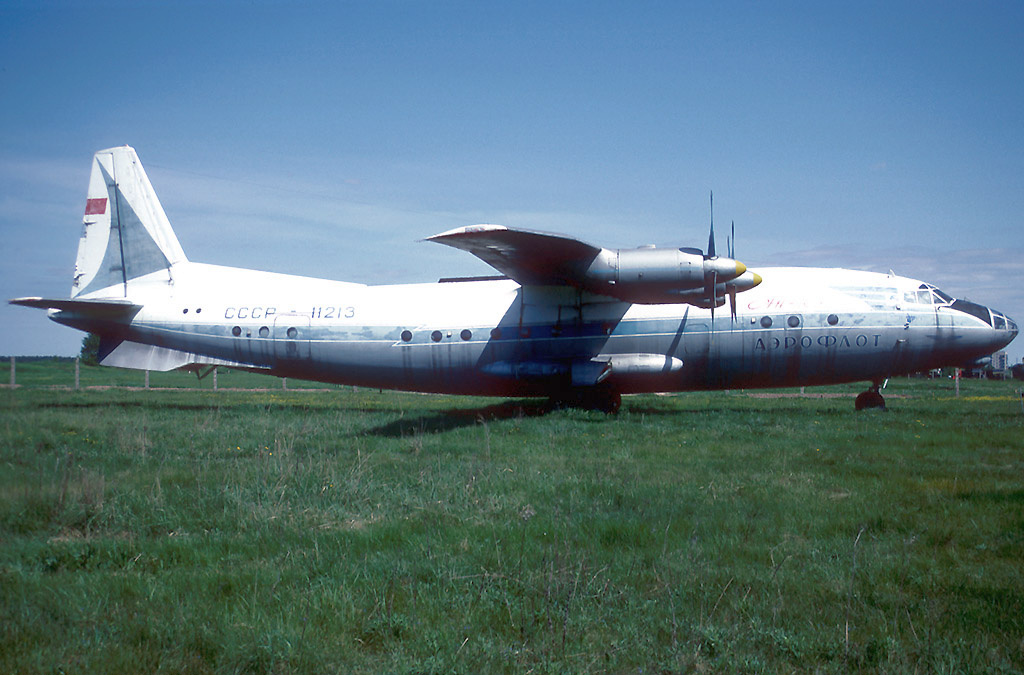
Aeroflot An-10A CCCP-11213 Monino 1992-6-4.png


This Antonov project was built for civil aviation, it had four engine, was 34m long and had a 38 metre wingspan. The first flew in March 1957. I'm talking about the Antonov An-10 Ukraina, meaning Ukraine. The production began in 1959, and the plane entered service with (only) Aeroflot. It could be easily converted into a military plane. Until 1960, 112 were built. The plane could fly at a speed of around 345 knots Ground speed. The range was 2530 miles. The plane was a decent performer, more economic than the Tu-104, but had more problems, such as stability issues, causing two crashes, along with icing problems and similar situations. The plane continued service, but its fate were two crashes in the early 70s, one killed 122 people, when both wing separated due to structural failure. The Antonovs fuselage hit woods close to Kharkiv. The airline decided to cease Ukrainas operation.
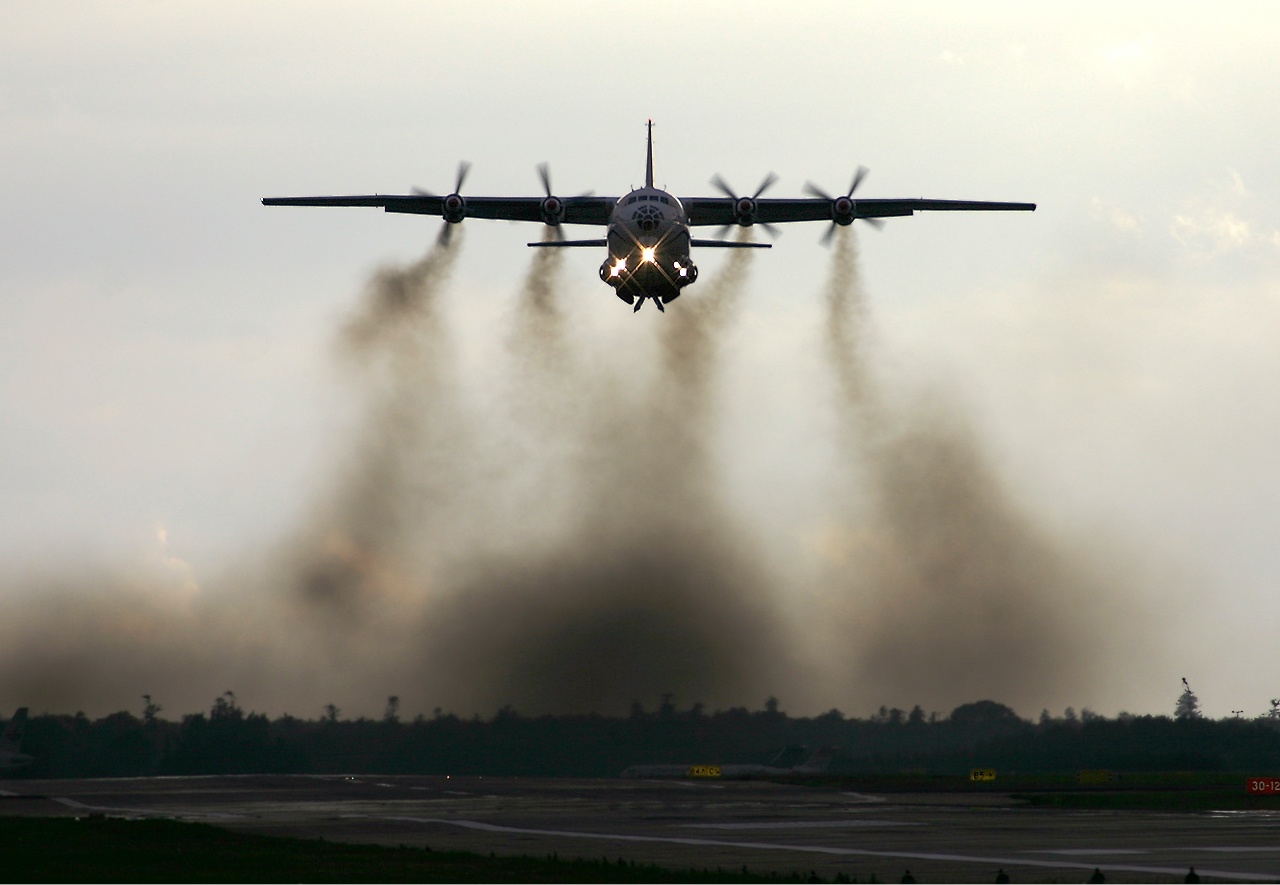
Gomelavia Antonov An-12 Mutzenberg.jpg


At the same time, a better plane was developed, though its performance and size was fairly similar. There were and still are numerous of An-12 flying in many versions. Made to operate remote airstrips, the plane was quite popular in Africa. The Antonov was also built in China as Shaanxi Y-8.
The plane is used in Africa, Europe and Asia, from Angola to Poland (Bias Me), Indonesia and Afghanistan. Sturdy.
Ilyushin Il-18


Ił-18 Sił Powietrznych Federacji Rosyjskiej


 In my opinion, it's one of the greatest aircraft ever built.Another old and sturdy Ilyushin. The il-18 was a 1946 abandoned programme, but in the 50s, a design of a new prop began. The plane was pressurized, it had a nose radar and was the first Soviet airplane with autoland systems. The plane looks to be sturdy, right. Over 15 versions were built, since 1959 to 1978. More than 850 were built. The planes size was comparable to the An-12, with similar speeds but a better range. The takeoff and run distances were bigger, but the Il-18 was also used on remote African runways.
As an airline, you could chose two engines, Ivchenko Ai-20M or AW-68. The cabin was quite spacious, but the aircraft was noisy and sometimes vibrated a lot. The Ilyushin could carry from 100-120 passangers. The plane was flown in for example Cuba, Djibouti, North Korea (still), Egypt and Yemen. Three ones are still operational, possibly the youngest one would be 37 years old, if it was built in 1978 (the last). Not bad, as some 47 year old An-12s are still serviceable.This plane can be considered safe in my opinion, better than An-10 Ukraina. Overall, quite nice, sturdy and advanced for it's times.
Tupolev Tu-114
Aeroflot Tupolev Tu-114 JAL livery APM.jpg


Tupolev bureau was meant to design a long range aircraft in 1955. The airplane was based on the Tu-95 Bear bomber. The name was originally Tu-95p (passenger), but initially it became Tu-114 "Rossiya". The changes were fairly tiny, small cockpit design features were changed along with the fuselage design. The engines were the same as with the Tu-95, they are also implicated on An-22 aircraft.
 Due to the large engines and props, the gear was placed relatively high. The plane could reach an amazing speed of 880 km/h, 55 knots faster than boring 737 jets. Sorry, but this plane is too boring, despite -200 version being quite interesting and sometimes even extreme. In fact Boeing 707 jest or Dc Douglas 8 (Dc Douglas, he he) aircraft reached similar speeds. The rang was also quite impressive, 9700 km. The plane flew from Moscow to Tokyo in a JAL friendship repaint. the ceiling was decent, 38-39000 feet.
Tu-114s carried from 120-220 passengers, operating on intercontinental routes, such as Moscow-Havana(via Conkary), Belgrade, New Delhi and Montreal. The plane had a dinning lounge and sleeping beds, like the older American Boeing 377 Stratocruiser. Only 32 were built since 1958 to 1963.  The plane was retired in 1976, only one Tu-114 was lost. They were replaced by jet Ilyushin 62 aircraft. Sadly, because the Tu-114 was an outstanding airplane. Luckily replaced by another great liner.
Antonov An-24


The Antonov An-24 was first flown in 1959, being designed earlier. It was built to replace the older Il-12 and Il-14 aircraft. An advantage of this plane was the fact, that it was turboprop powered. The plane is prepared for operating at extreme airports, such as ones with short runways, gravel strips, but also ones with minimal ground service. The cabin was considered noisy, however the airliner was quite popular with Warsaw Pact airlines, along with poor African countries.
The safety, well..... there were a few problems with icing causing crashes. 152 An-24s were lost out of 1367 (along with the Chinese version, a topic later on). About two dozen An-24 versions existed or were planned. There is also a Chinese version-XianY-7, along with a modernized avionics airplane called Xian MA60.  The production of An-24s started in 1959 and ended- 1979. They ares still operational in North Korea, Russia and Ukraine. Nearly all Warsaw Pact countries used An-24s (both as civilian and military airplanes). Somewhat the Wests Fokker F-27 Friendship.
Ilyushin Il-62


One of my very favourite aircraft. A beautiful, but dangerous plane. I'd love to see the Project Tupolev Il-62 in FSX so much, I'll even pay for it.
In 1957 the Tu-114 was developed, a long range Soviet airplane. Shortly, Ilyushin (Tupolevs rival) wanted to design a long range jetliner, in order to replace Il-18s and Tu-114 aircraft. This design was fairly similar to the British Vickers VC-10, just bigger. The first one flew in January, 1963.It had a unique feature of four engines at the back. Due to the weight they created, while on the ground, there was a gear at the back so that the plane doesn't fall back. The Ilyushin had a pressurized and air conditioned cabin, considered a little bit quitter than Il-18s or Tu-114 due to the engine positioning. The plane had a cruise speed around 820 km/h, range of 7000 km, carried around 170-200 passengers. At a length of 52 metres and wingspan of 43 it was a large airliner, longer than Boeing 707s or the early Dc Douglas Dc-8. The design had one issue-engines. Both NK-8 and D-30 engines had major flaws, such as turbine bearings, causing two deadly crashes in Warsaw.
The plane was introduced in 1967. The primary user was Aeroflot. Il-62s were also used in Czechoslovakia, Cuba, West Germany and Poland. The plane was leased by Air France, KLM and JAL. A modernised version was built in 1974, the -62M,one if its new features was an additional fuel tank in the tail section. Despite having decent operational abilities, the plane had difficulties with being loaded, making the flight preparation time quite long. A positive aspect of the plane was that pilots enjoyed flying it and liked.
292 Il-62 aircraft were built between 1963-1995. 10 of them are still flying. 22 hull loses occurred.
Sadly they aren't safe on their position, probably their fate is being changed. Hopefully by some cool plane. Cool- no A320 and 737.
Tupolev Tu-134


With time, the standards of aircraft grew higher and higher. The Tu-124 was now considered old and uncomfortable. Tupolev designed the -134, a plane made to be closer to the Western standards. The angle of the wing caused difficulties and pilotage hazards. First suppose to be called Tu-124A, the new plane featured wing modification and later on thrust reversers. The performance was different along with different engines. The cabin could fit 96 people, 40 more than the Tu-124.
The plane began service with Aeroflot in 1967. It was soon tested in Poland for BCAR, an airworthiness test. BCAR enabled the Tupolev to fly in western countries- the test was ICAO related.. It was quite revolutionary, as the Tu-134 was Russian. Russian wasn't a member of ICAO. In the end the plane was certified, but considered noisy. It also had an impact on the cabin noise.
Between 1966-1984 854 Tu-134 aircraft were built. They were quite popular with Warsaw Pact nations, along with many African operators. The Tu-134 is considered popular and 18 are still operated in Russia, North Korea and Sudan. The Russian operators are phasing out most of their Tu-134s, due to the crash of RusAir flight 9605, that sadly killed 47 people. Afterwards, Dimitry Medvedev Another notable crash occurred in October 1986, when pilots of a Mozambique (I tired to make it an adjective) presidential Tupolev had problems with navigation while landing in Maputo, crashing in South Africa, killing 33 (and the president).


piątek, 6 marca 2015

The weirdest plane crashes- Pilot vs Instruments Part Two

This time something different. Pilots with wrong instruments. Wrongly indicating components. This happens in life, however it's not always it. Some pilots do know that the other crewman are doing the wrong thing, but don't want to tell them. It happened in history.
This time, not the weirdest plane crashes, but some unusual ones. Now, let's see one of them.

Air India 855 Deadly Indicators.
On New Years day, 1978 Air India 855 was taking a flight from Mumbai to Dubai. There were 213 people on board. The aircraft operating the flight was A Boeing 747-200, Emperor Ashoka, the first Jumbo jet delivered to the airline.


 The plane took off Mumbai Intl Airport at 20:40. After a minute the crew was supposed to turn right. The captain began the turn.
Shortly the Captain noticed a toppled ADI, meaning it is stuck, showing the plane is still in a right turn. The F/O agreed with the commanders statement, however the Flight Engineer, looking at the Backup ADI noticed a difference. The Captain however had his own solution, banking the plane even more to the left. The commander used the rudder and yoke to control the plane, the FE tolled the captain not to bank the plane, however he didn't stop. Just 101 seconds after take-off the plane hit water.
All passengers and crew perished. It was the deadliest air crash of India at the time.
The cause of the crash, well two factors. ADI malfunction. The captains artificial horizon wasn't working properly. It was stuck on a right bank indication.
Indicators sometimes fail, that's normal. This time, however the pilots were at fault. At first, the captain is god. That is  the way the first officer (at all) and Flight engineer (too late and probably not to directly) didn't tell the captain, that he shouldn't turn the plane left and left even more. Quite common.
Tenerife, March 23rd. A KLM 747-200 collides with a Pan Am Jumbo jet. The captain of the KLM captain began the takeoff roll with ATC clearance. The other crewman did know the situation, but didn't tell the captain about his mistake. In addition the commander trained and gave licence to the First officer, the F/O obviously didn't want to tell him about the mistake. Like if you wanted to tell your boss, that he made a mistake. Easy to say, but hard to do.
Another 747 (200 ironically) crash with an indicator problem occurred in 1999. A Korean Air Cargo plane lost control and crashed near Stansted, after a malfunctioning gyro made the captains ADI do funky stuff and indicate weird things, he steered and banked the plane, until it crashed. The First Officer and Flight Engineer were much younger, and refused to say that the commander overbanked his plane. Another aspect, politeness to people with higher ranks is well known and usual to many Asian cultures. It includes Korea.
A plus of it all, now pilots flying together have to be similar age. There's also training, so that F/O make remarks and notes of captains mistakes, a general improvement is seen. Hopefully similar crashes won't ever happen. Because the captain isn't god. He is as human as other pilots, just mor experienced. Usually.

środa, 4 marca 2015

The weirdest plane crashes- Instruments vs. Pilot.

As pilots can't always fly the plane with only visual clue, they rely on instruments. Obvious and easy like 2+2. However sometimes pilots don't want to, or can't believe what the instruments are telling them. Not a problem with nice visibility. However at night or a at a foggy day, they are your one and only friend. The obvious part has ended.
On the other hand, many pilots incase of an emergency situation believe in their senses, the captain, wrong indicators. Not that obvious why. Some instruments are wrong, but in addition pilots don't know what to do.


An example- spatial disorientation. A situation were pilots don't trust there instruments, but senses in order to fly an aircraft, the definition is kind of mine and unofficial.  IMHO some pilots don't rely on indicators, but some visual cues, such as lights, which can get them very wrong. The feeling of bank, speed or forward roll (that is how you'd call it) causes a massive confusion in the pilots mind.
Subsequently, you get crashes.

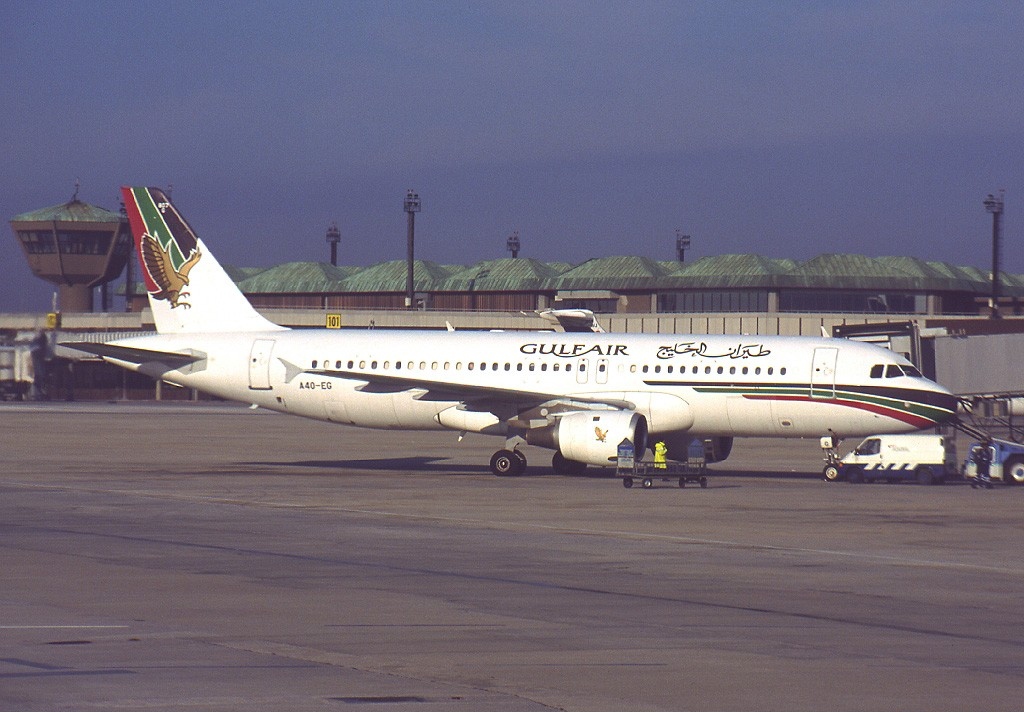
Gulf Air 72: Pitch negative
Airbus A320-212, Gulf Air AN0212197.jpg
August 23rd, 2000 A.D. The world hasn't ended (some people believed that It'll happen 1999), planes fly around it too. An A-320 with 143 passengers on board was heading from Cairo to Bahrain.
The plane was on approach to Bahrain. The speed of the Airbus was too high, though other procedures were normal.


 While on ILS and visual with the airport, the pilots decide to go around, as they were going to fast. They put the gear lever and flaps up, adding power. Shortly the crew heard a GPWS alarm. They didn't notice it, configuring the plane. After ten GPWS alarms, the plane hit waters close to the runway threshold killing everyone on board.
A three day mourning was announced. The investigation into Gulf Air 72 concluded the following things.
  1. The individual factors particularly during the approach and final phases of the flight were:
    1. The captain did not adhere to a number of SOPs, such as:
    2. significantly higher than standard aircraft speeds during the descent and the first approach
    3. not stabilising the approach on the correct approach path; performing an orbit, a non-standard manoeuvre, close to the runway at low altitude
    4. not performing the correct go-around procedure
    5. other related items
  2. In spite of a number of deviations from the standard flight parameters and profile, the first officer (PNF) did not call them out, or draw the attention of the captain to them, as required by SOPs.
  3. A perceptual study indicated that during the go-around after the orbit, it appears that the flight crew experienced spatial disorientation, which could have caused the captain to perceive (falsely) that the aircraft was ‘pitching up’. He responded by making a ‘nose-down’ input, and as a result, the aircraft descended and flew into the shallow sea.
  4. Neither the captain nor the first officer perceived, or effectively responded to, the threat of increasing proximity to the ground, in spite of repeated hard GPWS warnings.
  5. The systemic factors, identified at the time of the above accident, which could have led to the above individual factors, were:
    1. Organisational factors (Gulf Air):
    2. A lack of training in CRM contributing to the flight crew not performing as an effective team in operating the aircraft.
    3. Inadequacy in the airline's A320 training programmes, such as: adherence to SOPs, CFIT, and GPWS responses.
    4. The airline’s flight data analysis system was not functioning satisfactorily, and the flight safety department had a number of deficiencies.
    5. Cases of non-compliance, and inadequate or slow responses in taking corrective actions to rectify them, on the part of the airline in some critical regulatory areas, were identified during three years preceding the accident.

The plane flying to high went around, with a captain believing that he is pitching up to high, giving inputs so that the nose lowers. In fact the pitch was correct, but the pilots actions- incorrect. With incompete training, performing a wrong procedures.
As you see a pilot strongly believing that he is doing something right, makes the situation worse and worse. Factors such as training or bad flying habits make it worse. In addition captains aren't corrected while doing something wrong. Tired or mistaken by instruments, sometimes by senses.
A bad scenario are General aviation pilots, who fly themselves or without a second crew member. This isn't proven information, however the effect of speed, roll, pitch and yaw is stronger on a smaller plane, though jets fly faster so they might create Spatial disorientation much worse.
I believe that this is one of the barriers in aviation safety, that are quite hard to be prevented. There are warnings, alerts and other pilots, however the aviator is beaten by nature. Terrorist can be prevented, by errors of human nature in aviation can't. Some are over us, humans, who invented planes. And cause all of their crashes.
All pictures from Wikipedia.