niedziela, 12 lipca 2015

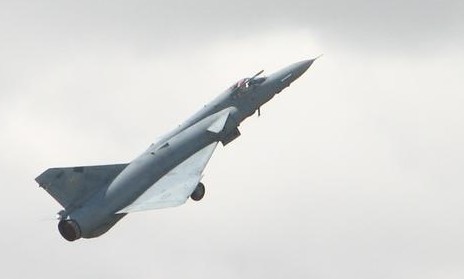
Rare Aircraft-Yak-28

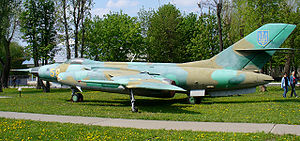
A Tushino Appearance and it's Design


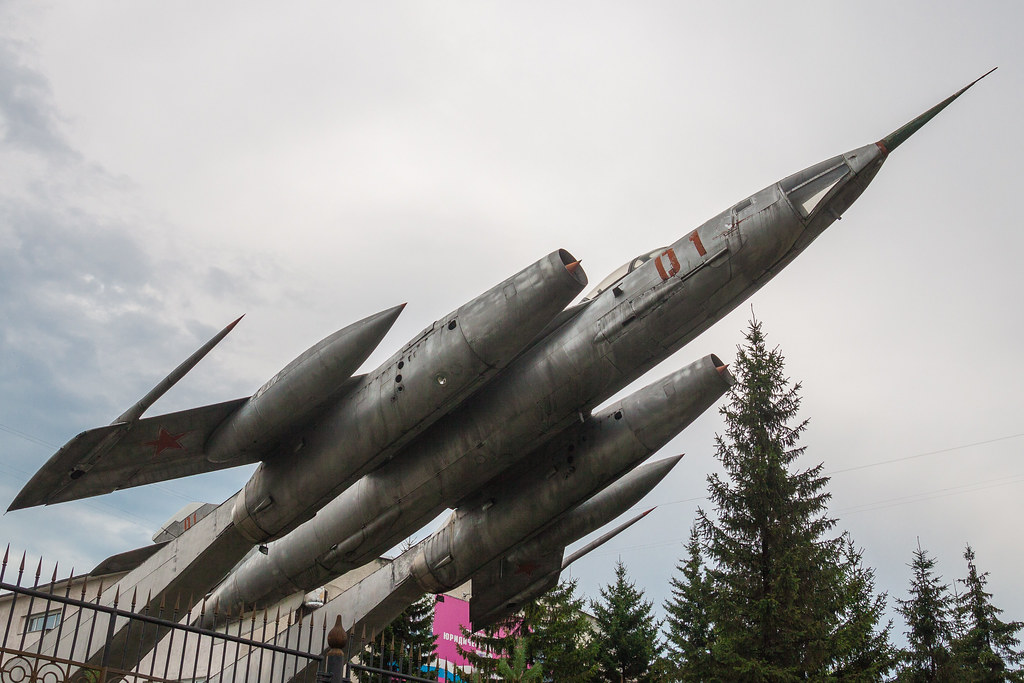
Photo from Flickr.com by Tom Wigley.
Details about the development of this aircraft aren't known. The prototype was called the Yak-129.  The Yak-28 was first flown on March 5th 1958 and first shown in puclic in 1961 on the Tushino Air Show. It had plenty of roles, used as a bomber, interceptor, reconnaissance and electronic warfare aircraft, somewhat also as an attack and fighter airplane.
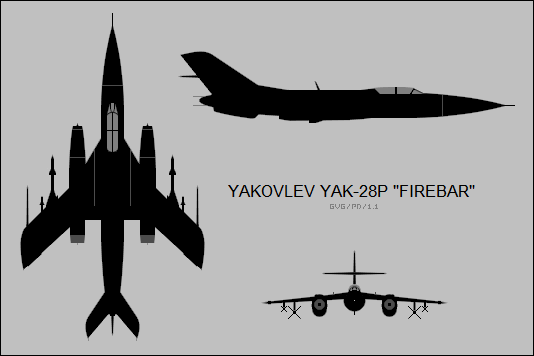
The Yak-28 had swept wings and two Tumanskiy R-11 turbojet engine with afterburner. There were two types of radar available. The autopilot used on the YAk-28 was rather basic. For navigating, RSBN navigation was used. RSBN was a popular system used in Soviet military aircraft, but later on also in civilian airplanes. The navigator sat in front of the pilot in the glass nose. The Yak-28 also used terrain maps. The aircraft had ejection seats. All versions except the interceptor had cannons and four missiles, two short range and two long range. The plane could carry two rockets and more than 2000kg of bombs

Source:Tom Wigley from Flickr.com
Performance
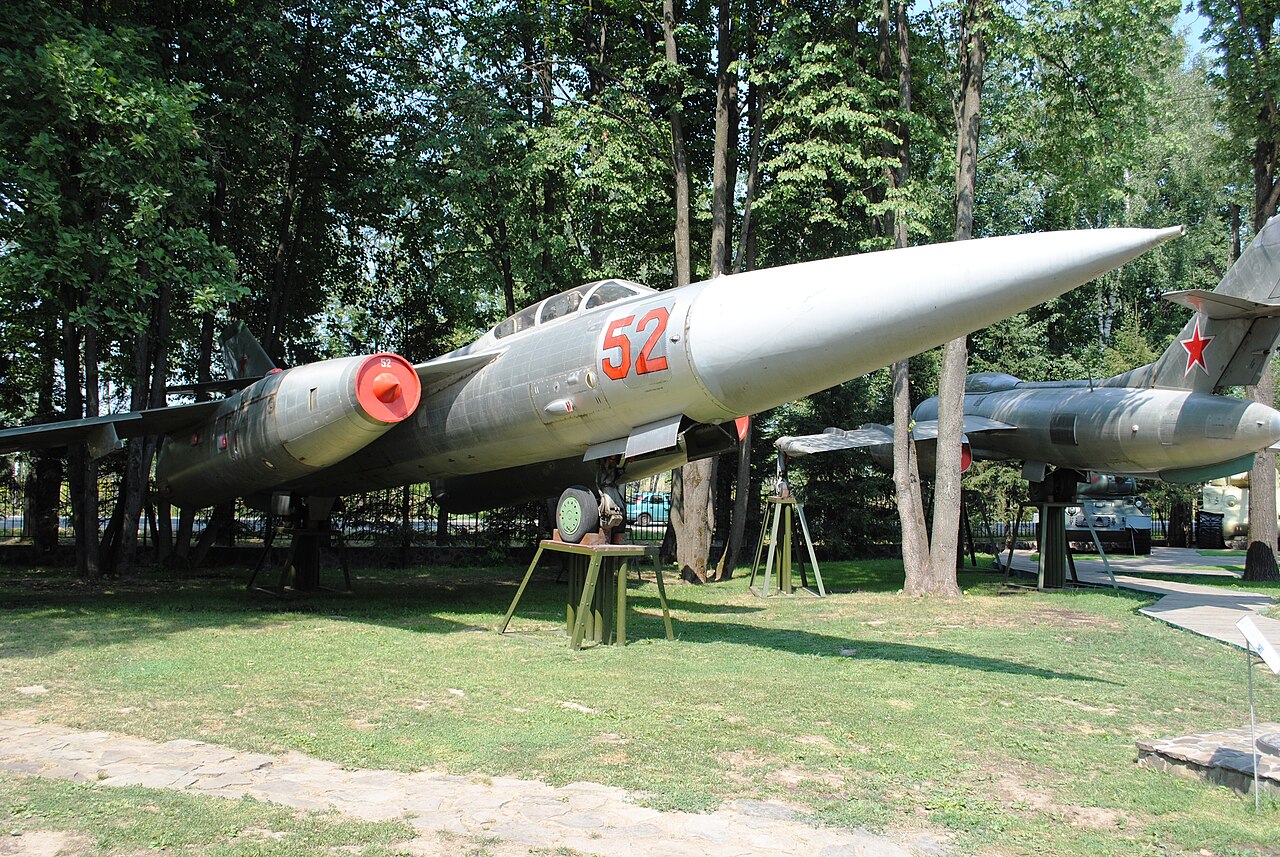
Aerplain.jpg
Yak-28 interceptor.
Yak-28


  • Maximum speed: 1840 km/h (1142 mph)
  • Range: 2,500 km (1,550 mi)
  • Service ceiling: 16,750 m (54,954 ft)
  • B-66 Destroyer


  • Maximum speed: 631 mph (548 kn, 1,020 km/h)
  • Ferry range: 2,470 mi (2,150 nmi, 3,970 km)
  • Service ceiling: 39,400 ft (12,000 m)
  • F-101 Voodoo


  • Maximum speed: Mach 1.72 (1,134 mph, 1,825 km/h) at 35,000 ft (10,500 m)
  • Range: 1,520 mi (1,320 nm, 2,450 km)
  • Service ceiling: 58,400 ft (17,800 m)
  • For it's size, the Yak-28 was a decent performer. Compared to other reconnaissance-light bomber aircraft from these times, there's much less data, even on Russian sites. The rate of climb is unknown, as well as combat radius.
    Versions
    Yak-28

    This was the bomber version. Produced in small numbers, it had no radar.
    Yak-28B Brewer A
    Version with weapon aiming radar system and JATO bottles fiited.
    Yak-28L Brewer-B
    This variant has a ground controlled targeting system
    Yak-28I Brewer-C
    A version with new radar and terrain map.
    Yak-28U Maestro
    The Yak-28U was a trainer aircraft, a two seater with a different nose (and probably simpler instruments).
    Yak-28R Brewer-D

    The reconnaissance variant, with a new radar, modified nose and pallets with mission equipment. Rather a short range reconnaissance aircraft, ideal for wartime reconnaissance.
    Yak-28PP Brewer E

    This airplane is the first Soviet electric countermeasures aircraft (aircraft, that deceive detection systems, such as sonar or radar), the two other (only) being a version of the Su-24 and Mi-8 helicopter. The electronic warfare equipment was placed in the bomb bay
    Yak-28P Firebar
    Yakolev Yak-28L Brewer-B 09 red (7903015146).jpg
    With additional fuel tanks and a new radar, this version was a long range interceptor. It used R-98 missiles installed on other Soviet interceptor.
    Operational History
    صورة معبرة عن ياكوفليف ياك-28
    A total of 1 180 Yak-28s were produced between 1963 and 1971. The Aircraft was spread out in the Warsaw Pact countries and many air bases in the USSR,as an interceptor airplane. In 1966, April 6th A Yak-28 crashed after a failure of all of it's engines in West Berlin. After the failure,the aircraft diverted from a rural area in West Berlin,and tried to land on a lake, but crashed. Both pilots died, but saved lives of many people.After the crash, the crew was posthumously awarded the Order of the red Banner (a Soviet award for bravery and courage etc.). Meanwhile, the British recovered the remains of the Yak-28 and brought to the United Kingdom for examination. The Yak-28 partcipated in many operations and training exercises. It was widely used in the Afghan War (1979-1989).
    Despite poor automation (very basic autopilot), the Yak-28 was sometimes difficult in operation, due to engine problems related with the afterburner. Later on, they were reduced.The fuselage was quite weak and vulnerable. The plane was advised not to make acrobatic manouveres.
    The Yak-28 was retired in 1994.As a bomber and attack airplane it could be changed for fighter aircraft with better manouverability or weapon loading. As a reconnaisance, the Yak-28 wasn't sophisticated enough (radar).
    Operators
    Soviet Air Force
    By Alex Polezhaev from Flickr
    Operated by the Air Force and Anti-Air Defense (interceptor) until the country collapsed.
    Russia
    Operated for one year, afterwards retired.
    Turkmenistan
    I haven't found anything about what Turkmenistan's Yak-28s. They were retired in 1992.
    Ukrainian Air Force
    Yak-28PP 2007 G1.jpg
    35 Yak-28s were operated until 1994.
    Why "Rare"?
    Yakovlev Yak-28P three-view silhouette.png
    Why? The Brewer (or Firebar, or Maestro) was very popular. However, it isn't well known, despite more than a thousand have been build.The issue here, is that the Yak-28 isn't popular today and therefore well-known (or as known as other soviet bombers-for example Il-28).There's one book about the airplane (in actual fact the Yak-25/26/27 and 28).The Yak-28 doesn't stand out, doesn't have anything special. However, I consider thios plane to be interesting due to it's multirole capabilities and unusual design. However, most people will probably disagree with that.
    Nonetheless, the Yak-28 is a noteworthy plane.


    sobota, 4 lipca 2015

    Rare Aircraft-Atlas Cheetah

    Hey there everyone,
    I've started a new series of posts (Sorry, but I have to organise verything into some series, it helps me a lot) about rare, lees known or forgotten aircraft. The next one can be either about the Tu-128, the A-5 Vigilante or the Convair CV-880 and CV-990. If you want something different, write in the comments.
    South Africa's Supersonic Fighter
    Cheetah C w wersji myśliwskiej
    In the early 1980s South Africa needed a modern fighter and strike aircraft. Many bordering countries that were equipped with advanced Soviet aircraft, such as the Mig-23 fighter. This could be seen during the so called Border War, where South Africa and Portugal fought Namibia, Angola, also supported by Cuba.
    Other than that, the political situation in South Africa was a problem. United Nation's sanctions prevented the country from buying new aircraft, the only option being upgrading the ones owned by the South African Air Force (SAAF), if talking about fighters, mainly old Mirage III and a newer, hence more advanced Mirage F1 aircraft (At the time SAAF also operated Bucaneers or Canberra bombers as other combat aircraft). The SAAF decided to make very large upgrades to one of it's fighters.
    A modified Mirage III
    The SAAF decided to make a newer, updated version of the Mirage III. The Mirage had one successful updated, the IAI Kfir (In Hebrew-Lion Cub), first flown in 1973. The Mirage III was older, and pilots, engineers and staff had more experience with it, than the Mirage F1, making the Mirage III an ideal aircraft for upgrades.

    The IAI Kfir (Sri Lankan Air Force).
    The work on the Mirage II upgrade was carried by Atlas Aviation. The company upgraded or changed many aircraft used by the SAAf, such as the Aeramacchi MB326 (Atlas Impala). A group of Israeli technicians helped designing the Atlas Cheetah. The airframe was changed, sometimes replaced. Canards (small surfaces placed ahead of the wing) were installed, a refuelling probe was installed (more likely build for possible customers), better ejection seats, a more powerful engine, the wing leading edge was changed, flight dynamics were improved.
    The minimum airspeed was reduced, the Angle of Attack was improved due to some nose corrections. other than that the maximum takeoff weight was increased by 700 kg (that's nearly three more bombs that could be loaded onto the Cheetah). The Cheetah's avionics included a dopppler radar that could track and target both air and ground targets. The aircraft had new navigation and weapons systems. The plane was fitted with a self-defence system.

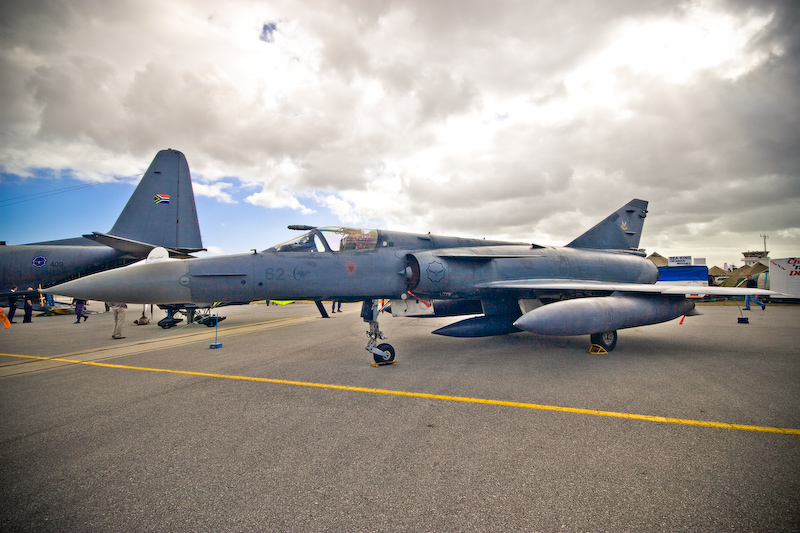
    A Cheetah stored in a museum in Pretoria.
    The design

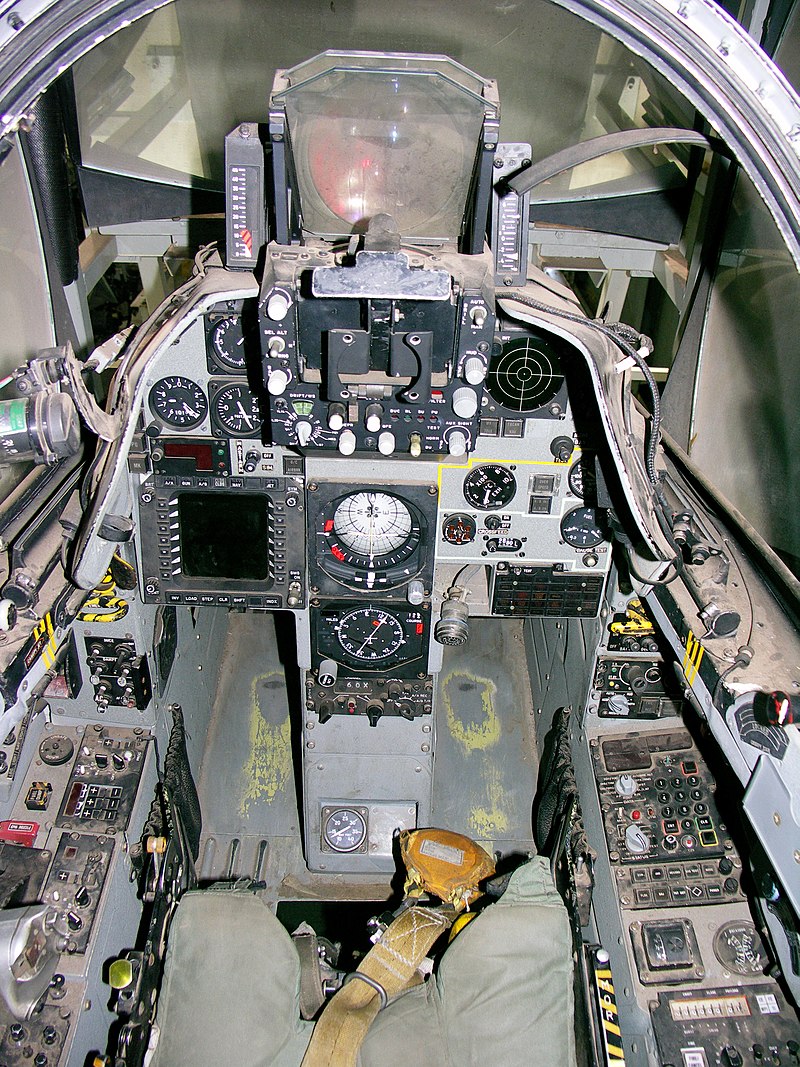
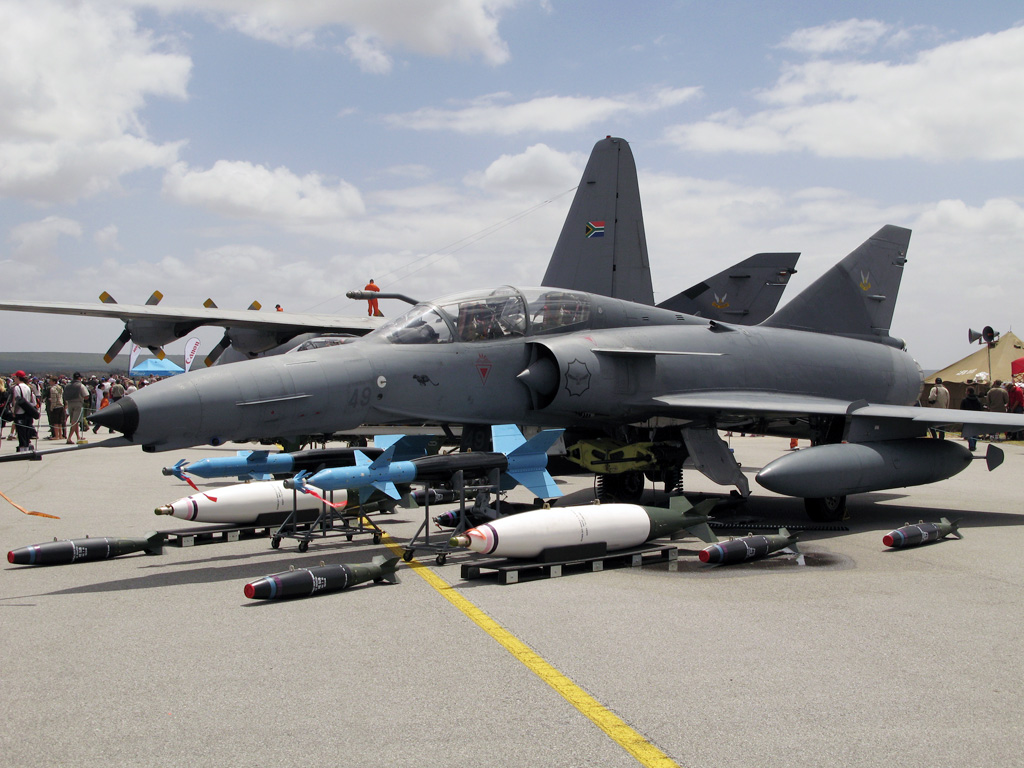
    The Cheetah's cockpit wasn't as sophisticated as many cockpits from the eighties. Compared to the Mirage, there was much more features that were used in the most advanced aircraft at the time, the fourth generation fighter, such as a Head-up Display. The Cheetah could carry numerous bombs, the lightest weighing 12,5 kg. and the heaviest-250, totally 4,400 kg of bombs. It could carry two missiles and four rockets, that is two times more rockets than the Mirage III.

    With weapons
    Cheetah's Performance
    Performance
    Atlas Cheetah 3 (DanieVDM) crop.jpg
    Atlas Cheetah Performance
    • Maximum speed:
      • At altitude: Mach 2.2 (1,460 mph, 2,350 km/h)
      • At sea level: Mach 1.14 (865 mph, 1,390 km/h)
    • Range: 700 nmi (1,300 km)
    • Ferry range: 1,400 nmi (2,600 km)
    • Service ceiling: 55,755 ft (17,000 m)
    • Rate of climb: 45,950 ft/min (14,000 m/min)
    The be honest, I think that the performance of the Atlas Cheetah. Why?
    Mirage III Performance


  • Maximum speed: Mach 2 (2,350 km/h, 1,268 knots, 1,460 mph) at 12,000 m (39,370 ft)
  • Ferry range: 3,335 km ()
  • Service ceiling: 17,000 m (55,775 ft)
  • Rate of climb: 46,600 ft/min ()
  • A comparable aircraft is the Mig-23 a third generation fighter-attack (bomber) aircraft.
    Mig-23 Performance


  • Maximum speed: Mach 2.32, 2,445 km/h at altitude; Mach 1.14, 1,350 km/h at sea level (1,553 mph / 840 mph)
  • Range: 1,150 km with six AAMs combat, 2,820 km ferry (570 mi / 1,750 mi)
  • Service ceiling: 18,500 m (60,695 ft)
  • Rate of climb: 240 m/s (47,245 ft/min)
  • The Cheetah doesn't stand out with bad performance. It's an improvement. It is. But in general  the performance isn't a big change from the Mirage III.
    The Versions
    Cheetah C


    This Cheetah version had better avionics and radar, a HUD updated. Other than that, the design changed, such as the refuelling probe an gear. The C version could use GPS guided and Laser guided bombs.
    Cheetah D

    This was the two-seater variant. The one and only two seat variant would help pilots to switch to the C variant. The Cheetah D was in a way a trainer. The engine replaced, too. The windshield was modified. The D variant was also used for testing by Atlas, which later became Denel Aviation. One of tests included a Cheetah D version, that used a modification of the Klimov RD-33 engine used on Mig-29 and Mig-35 aircraft.
    Cheetah E

    This version of the Atlas Cheetah had rather simple avionics. It's role was an interceptor, that could be used in case of an attack on South Africa from the north.
    Cheetah R
    This variant was more of a study into a reconnaissance version. The SAAF didn't want a reconnaissance Cheetah, and Cheetah C was made into a reconnaissance airplane.
    Operation and Operators
    A drawing of the Atlas Cheetah
    Due to the lack of data about South African technology from the Apartheid times, there is very little knowledge about the Cheetah's operation in South Africa.The first Cheetah's to roll of production line were D and E variants. Eventually I haven't found data about the first flight, but the fighter became operational in 1987 and first flown in 1983. Between 1986-1991 70 Cheetah's were built. None of the Cheetah's entered combat in Border War. Two of them were on a 24/7 alert status and meant to be used as an interceptor.
    Other than the SAAF, two (actually one) air forces operated Cheetah's. The first one was Chilean Air Force. As Chile operated Mirage 5 fighters and they were similar to the Cheetah, the E variant was bought for spare parts. The mirage 5 was retired in 2007, so there was no need for the Cheetah.
    The second operator was Ecuador. In 2009 10 Cheetah Cs and 2 Es were bought. They arrived in Ecuador on April 2011 and are still operated. Denal Aviation (ex Atlas) owns two Ds as testbed. SAAF retired Cheetah's in 2008, replacing them with Saab JAS39 Gripens.
    Why was the Cheetah unsuccessful?

    USMC FA-18 Hornet.JPEG
    F/A-18 Hornet
    Atlas Cheetah was the last Third generation Fighter. At it's times highly advanced Fourth Generation fighters were already operational. They have highly advanced avionics with LCD displays, much better radars, advanced autopilots (most third generation fighters had pitch control only in case of the autopilot's "work" on the altitude), Fly-By-Wire controls or supercruise (maintain a supersonic speed without use of afterburners, though featured on older aircraft, fourth and fifth gen. fighters have it more often than any other fighter generations).

    Fourth Generation fighter cockpit simulator (Su-34).
    With such competitors, the Cheetah was too old. It can be simply explained by the fact, that it was meant to be an improvement for the SAAF, not really an aircraft targeted for export to other countries.
    The Cheetah is an old airplane, the last third generation fighter. It's a bit of a mystery due to the times it was built in.
    All pictures from Wikipedia


    środa, 3 czerwca 2015

    ORBX FTX Australia First Impressions

    What is FTX Australia?
    For those who don't know, FTX Australia is a scenery for FSX covering the entire country of Australia. https://www.fullterrain.com/product/australia  It's the product's site. In general, FTX Australia features corrected rivers, lakes, roads, mountains etc. There are new terrain textures along with night lightning. The scenery is considered one of the best FSX payware addons. For those who know FTX Australia is and perhaps own it it's probably clear, that the scenery is worth every cent, penny, eurocent whatsoever.
    Australian Capital Territory.
    Only one airport in here.

    I decided to take the Avro Shackleton for a spin. Very nice airplane developed by Rob Richardson.  At first I saw, that the ground textures are veeery realistic. Default FSX ground is very dull, with boring colours that repeat itself. The colours aren't natural. In here, it looks very realistic. I set the Shackleton up (flaps up, trim 3.0-2.0, I don't remember, I set the Autopilot). The Shackleton needs some time to accelerate, but for it's size and appearance, the plane isn't a bad performer.

    Looking down, I can see trees. The way they are placed is very realistic. Some follow roads, some are on their own (that can't happen in default FSX, I've never seen it).There are multiple variations of buildings, bigger, smaller, longer, in different colours, shapes and diameters. The ground textures look great once again, fields are visible, some places are lighter, some darker. I've never seen this before!

    I continue my flight. The A/P (autopilot) is set to control the altitude (hold 3 200 ft.), once I control the heading and speed (the Shackleton doesn't have autothrottle). I can see a lot of small homes below. There are some spaces, probably parks or something similar. All fields and hills are detailed, covered with so called mesh ( mesh changes shape of the ground to more detailed, that is the simplest explanation I could think of).

    Afterwards, I turn back to the airport. The Shackleton does have a GPS, that I use to locate the airport. I'm flying at a high speed, so I drop the gear down and lower the altitude. I take a look outside and see this building. As Canberra is the countries capital, this might be some governmental building, I suppose. But nonetheless I continue my flight. The approach and landing is pretty much painless, apart from the flare manoeuvre.. I don't have pictures, sorry, I forgot to take them.
    Real life Canberra, from Wikipedia.
    New South Wales
    Wollongong, don't you like this name?


    This time, the Pilatus Pc-9 "ll make it. It's a semi-Australian development, so it's more realistic than the Shackleton, operated only by RAF and South African Air Force. I took off with and then push the throttle back, so that I can fly slowly and enjoy the landscape. Then, I decied to go faster back again. With proper trimming, the PC-9 flies quite nicely.It's not equipped with an autopilot, as it's an acrobatic/trainer airplane, that usually doesn't need A/P support.

    Afterwards, I turn left (the Pilatus is very handy, like a fighter jet, or at least a jet trainer), so that I can fly over the coast. I could see beaches, in fact they are all different, some longer, some wider, whatsoever. Actually, the Pc-9 reminds me of the Embraer Emb-314 Super Tucano,  a Trainer and light attack aircraft, that the Brazilian Air Force sometimes uses to fight with drug dealers. Going back to my FTX flight, I notice very low Fps from 6-10. Though the FPS was usually around 20-30, this time it dropped, probably due to dense autogen (trees and house, actually, that looks quite good). My computer isn't a monster one ( i3-2100 3.1Ghz, Geforce Gt 525 (m), 4 GB of RAM), it's very noise (due to the fact, that it is an All-in-one PC). I struggle flying near the coast, but that is the way to get to my destination, that is HMAS Albatross military air base, YSNW.
    The airport has two runways, both a little bit longer than 2 000 metres. The airport was operated by SeaVenoms and A-4 Skyhawks, I bet those airplanes would even make it from two times shorter runways. Troops and Navy cadets are trained here, too. A bit of knowledge about the airport, for those, who are interested, visit Wikipedia.


    A-4 Skyhawk in YSNW, from Wikicommons.


    Great landclass and waterclass. And those fields, textures. Great scenery.
    I continue my flight down to Albatross Air Base at a low altitude. My speed is quite high, despite the fact, the Pc-9 is very stable, it turns quite nicely. If you like flying trainer aircraft, acrobatic airplanes, handflying a nimble, but small airplane, then you should get this one for free. The Pc-9 is available at Iris simulation site (http://www.irissimulations.com/), or www.rikooo.com. Iris is also known for developing payware aircraft, however they sometimes have problems with proper system simulation, flight dynamics, etc. The freeware Pc-9 doesn't have such problems, some people say it's even better than some Iris paywares.

    As I get closer, I drop the gear down, then the flaps. The plane starts slowing down (with some help from the spoilers). I watch some of the views below. Again, great ground textures. I continue my approach and start my descend (PAPI lights help me). Afterwards, I land without a problem.

    Touchdown, a little fast, I know
    Other pictures


    piątek, 22 maja 2015

    Forgotten Flight 902

    At 20:54 an airplane was seen on soviet radars. 25 minutes later the aircraft entered Soviet airspace in the area of Kola peninsula. It was an intruder, that had to be shot down.
    KAL902
    Korean Air Lines Boeing 707 Fitzgerald.jpg
    From Wikipedia
    In the 70s many US/NATO reconnaissance aircraft spying the USSR would fly in from the area of the North Atlantic or even the North Pole. It was a high tension area. Times were different. Civilian aircraft wouldn't fly from Europe to Asia like they do today, over Russia.
    Korean Air Lines flew their aircraft from Paris to Seoul via Anchorage, Alaska using a Boeing 707. On April 20 1978, one of those flights, KAL902, took off from Paris Orly Airport. A total of 109 people were on board. The route to Anchorage took the 707 over the UK, Norwegian Sea, northern Greenland, quite close to the North Pole. Both magnetic and "physical" Pole.

    KAL902's route (from Wikipedia)
    The airplane had no INS (http://aerostudents.com/files/avionics/InertialNavigationSystems.pdf), nor GPS. Due to errors with calculating magnetic declination, when over Ellesmere's Island, the plane turned right. The proximity to the North Pole played the biggest role in making this mistake. Afterwards, the plane passed over Svalbard, then Barents sea, closing the USSR border. With no ground reference, as the areas of north Greenland or the Arctic Ocean are pretty much the same to the route flown after the change of course, Korean pilots didn't realise their mistake. They might haven thought about it, but maybe they were to tired, lazy or basically trying not to think, that they did something wrong.
    Soviet radars spotted the plane at 20:54, while 400km away from the border. They first assumed, that it was one of naval aircraft from Murmansk, coming back from it's mission, having not changed his IFF code. At 21:19, flying over Kola Peninsula, the 707, with crew unaware of the danger they have flown into. On the ground, Su-15 pilots were ordered to take off and intercept the intruder. Mach 2 capable, the Su-15 would be able to intercept the slow flying 707. 
    Sukhoi Su-15
    From Wikipedia
    One of the pilots, Alexander Bosov, identified the planes as the RC-135. The RC-135 is a reconnaissance aircraft design, based on the 707. Another thing that proved bosov to be right was the "Maple leaf" on the intruder's tail. The Su-15 pilot thought, that the RC-135 (in fact 707) belonged to Canada, a NATO country. The commander told the base about his faulty observations. Why faulty?The Leaf was actually a stork with spread leafs and Canadian Air Force never operated the RC-135, nor any military 707 variation (A 707 was used for VIP transport).

    Korean 747-SP. The "maple leaf" can be seen on the tail.
    From Wikipedia
    Soon, Bosov noticed, that the aircraft is in fact civilian, having Chinese characters on the tail, and the maple leaf, an airline logo. Bosov radioed the base, correcting himself, and saying that the airplane is civilian.

    Source: Wikicommons
    According to ICAO, an interceptor should fly up to the intercepted aircraft from the back, and then outrun the intercepted aircraft and stay in front of the intercepted airplane on the left side of it. The interceptors should wave their wings, which the intruder should interpret as: be aware and do what I order you to do. The intercepted airplane should do the same thing as the interceptor, showing, that they understand. Then, the interceptors should guide the intruder down to the closest airport or outside the border of the country (which in the intruder has flown into).

    F-18 intercepts a Tu-95, USAF photo.
    At the time, captain Kim (captain) noticed, that something is clearly wrong. The appearance of soviet aircraft showed, that he is far of course. The captain switched landings on, in order to show, that he is going to follow the Soviet aircraft. He tried contacting the Su-15s. But there was no response.
    kal 902 1
    From Wikicommons.
    Meanwhile the Soviet commander was ordered to fire at the Korean airliner. The commander-Alexander Bosov tried to convince ground about the fact, that the intercepted aircraft was civilian. Despite the fact, ground still ordered an attack on KAL902. The first missile (R-60 missile) missed the 707. The second missile, the same type, hit the left wing. The part of the wing fell off. It was about 3,5-4 metres long. Debris hit a part of the passanger cabin, causing a decompression and killing two people.
    R-60 missile.

    kal 902 2
    From Wikicommons
    The last part of the flight isn't known in 100%. The crew descended the 707 from 30 000ft. KAL902 disappeared from Soviet radar. However, the sot down part of the wing was still on radar and mistook it as some kind of missile, dispatching another Su-15. The commander, Alexander Bosov  was replaced, after his aircraft began running low on fuel. Meanwhile the 707 was searching for a place to land. Only one Su-15 followed the plane. The Sukhoi's pilot was probably trying to make the plane land in a Russian Air Base.
    The Korean aircraft was still flying for about 40 minutes, close to the Finnish border around the region of Karelia. In April, most Karelian lakes are frozen. Captain Kim was trying to find one, in order to put his plane down. He attempted to land several times, however his efforts were all in vain. The 707 finally landed on the frozen Korpijarvi Lake in Karelian ASSR, around 140km from the Finnish border. The touchdown was very rough.
    Crash site photographs: http://ilmari.puheenvuoro.uusisuomi.fi/78410-lento-kal-902-v1978 http://englishrussia.com/2008/06/03/the-korean-boeing/#more-1961
    Korean Air Lines 902 on land.jpg
    Crash site photograph (from Wikicommons)
    After two hours 107 survivors were rescued from the crash site by Soviet helicopters. The rescuers first saw Coca-Cola, Beer or read western newspapers and magazines.  Two people were dead, mainly because of the decompression, however details aren't known. Survivors were flown to the town of Kem.After two days passengers were released to  the US consulate, in Leningrad. The crew was kept in Murmansk, and later formally apologised. Afterwards, they were released, too. In the end, everyone was flown back to Seoul and payed $100, 000.

    An L-1011 equipped with INS. (From Wikipedia)
    Who was at fault? At first, Korean Air. Why? In 1978 the INS was already in use. The shootdown plane didn't have such equipment. This mistake would have not been made, if an INS had been installed. Due to the proximity of the North pole, the route could have been changed, as well as stopovers. Perhaps a Paris-New York (Chicago, Toronto, Boston)-Anchorage (Seattle would make it, too, as well a Honolulu)-Seoul route would be better and safer. However, this isn't all. Soviet pilots were unfamiliar with ICAO procedures. There always night have been a situation, with a civil, non-Soviet airliner. This didn't happen. Quite importantly, the ground officers played the biggest role in the accident. There are a few things, that can explain decision, though they can be questioned (especially the third argument). The first one is that, they might have been tired and weren't sure, about what they were doing. Perhaps what Bosov said wasn't conviencing enough, If he sated, that "It might be a civilian plane, etc.", the ground could still think, that the 707 was on a spy mission, instead of a civilian flight. The third argument, is that ground could think, that a spy plane uses a civilian livery, in order to trick everyone out.
    The lesson from KAL902 wasn't learnt. Later on, similar events happened. One of them KAL007, was eventualy one of the most tragic air disaster at the time, when it happened. 269 people died. Luckily, Cold war ended in 1991.
    BTW
    Remember, aviation is the safest way to travel! Don't forget about it!
    SolsticeMiGsmall (7633859414).jpg
    Mig-21, a soviet fighter jet. (Source: Wikipedia)